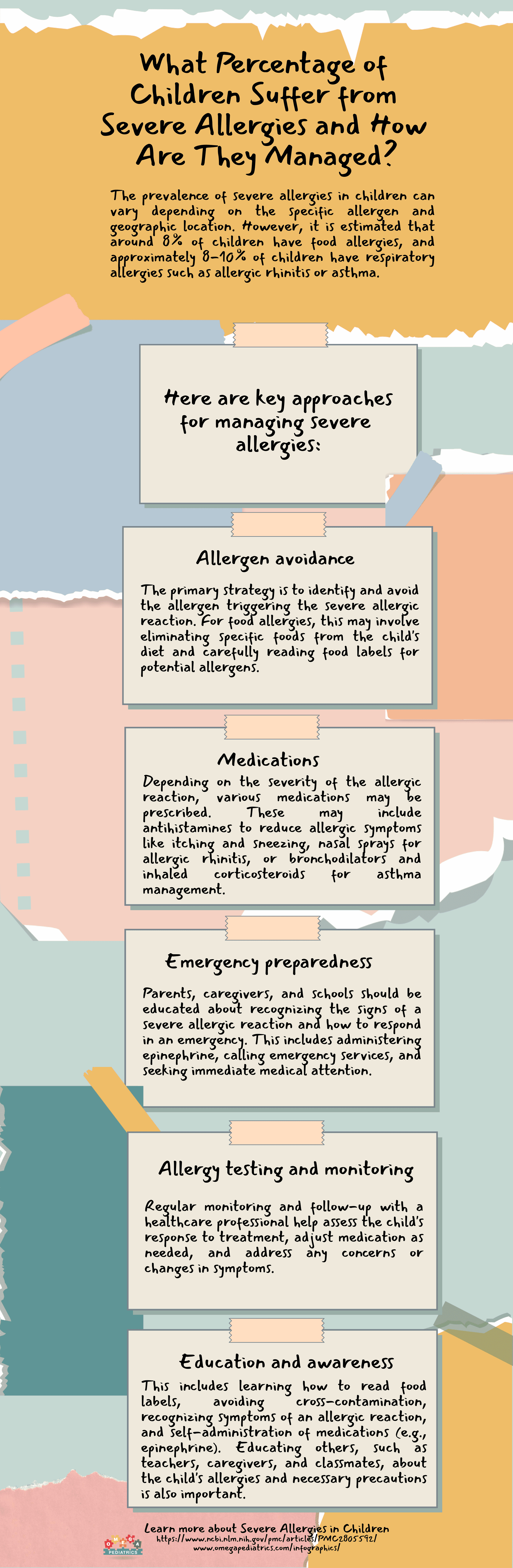
The prevalence of severe allergies in children can vary depending on the specific allergen and geographic location. However, it is estimated that around 8% of children have food allergies, and approximately 8-10% of children have respiratory allergies such as allergic rhinitis or asthma.
📅 Book an Appointment
Same-day and next-day appointments available.
Managing severe allergies in children involves a combination of avoidance strategies, medication, and emergency preparedness. Here are key approaches for managing severe allergies:
- Allergen avoidance: The primary strategy is to identify and avoid the allergen triggering the severe allergic reaction. For food allergies, this may involve eliminating specific foods from the child’s diet and carefully reading food labels for potential allergens. For respiratory allergies, avoiding exposure to allergens such as pollen, dust mites, or animal dander can help minimize symptoms.
- Medications: Depending on the severity of the allergic reaction, various medications may be prescribed. These may include antihistamines to reduce allergic symptoms like itching and sneezing, nasal sprays for allergic rhinitis, or bronchodilators and inhaled corticosteroids for asthma management. Epinephrine auto-injectors (e.g., EpiPen) may be prescribed for severe allergic reactions (anaphylaxis) and should be readily available in case of emergencies.
- Emergency preparedness: Parents, caregivers, and schools should be educated about recognizing the signs of a severe allergic reaction and how to respond in an emergency. This includes administering epinephrine, calling emergency services, and seeking immediate medical attention. Developing an emergency action plan in consultation with a healthcare professional is crucial to ensure a timely and effective response.
- Allergy testing and monitoring: Allergy testing, such as skin prick tests or blood tests, may be conducted to identify specific allergens triggering the child’s allergic reactions. Regular monitoring and follow-up with a healthcare professional help assess the child’s response to treatment, adjust medication as needed, and address any concerns or changes in symptoms.
- Education and awareness: Children with severe allergies, along with their parents, should receive education and training about managing allergies. This includes learning how to read food labels, avoiding cross-contamination, recognizing symptoms of an allergic reaction, and self-administration of medications (e.g., epinephrine). Educating others, such as teachers, caregivers, and classmates, about the child’s allergies and necessary precautions is also important.
- Support networks: Connecting with support networks, such as allergy support groups or online communities, can provide valuable information, resources, and emotional support for families managing severe allergies in children.
Common Causes of Severe Allergies In Kids and Warning Signs To Look Out For
- Food allergies: Common food allergens include peanuts, tree nuts, milk, eggs, wheat, soy, fish, and shellfish. Warning signs of a severe allergic reaction to food may include hives, swelling of the lips, tongue or throat, difficulty breathing, wheezing, vomiting, diarrhea, abdominal pain, dizziness, or loss of consciousness.
- Respiratory allergies: Allergic rhinitis (hay fever) and asthma are common respiratory allergies in children. Allergens such as pollen, dust mites, pet dander, and mold spores can trigger severe allergic reactions. Warning signs may include sneezing, itching of the nose or eyes, nasal congestion, runny nose, watery eyes, coughing, wheezing, chest tightness, and difficulty breathing.
- Insect venom allergies: Stings from insects like bees, wasps, hornets, and fire ants can cause severe allergic reactions in some children. Warning signs may include hives, swelling at the site of the sting, swelling in other parts of the body, itching, difficulty breathing, wheezing, dizziness, and a rapid drop in blood pressure.
- Medication allergies: Certain medications, such as antibiotics (e.g., penicillin) or nonsteroidal anti-inflammatory drugs (NSAIDs), can trigger severe allergic reactions in children. Warning signs may include hives, rash, itching, swelling, difficulty breathing, wheezing, dizziness, and a rapid heartbeat.
- Latex allergy: Some children may develop severe allergic reactions to latex, commonly found in rubber gloves, balloons, and certain medical devices. Warning signs may include itching, skin redness or rash, hives, swelling, difficulty breathing, wheezing, or anaphylaxis in severe cases.