
Lactation Services
Breastfeeding support for expecting families and newborn infants
We are trained to help families on their breastfeeding journey
Our providers have received extra training in the support of families on their breastfeeding journey. Breastfeeding protects against a variety of disease and conditions in infants including diarrhea, respiratory infections, type 1 and 2 diabetes, lymphoma, leukemia, and Hodgkin’s disease, childhood overweight, obesity and many more.
There are also maternal health benefits to breastfeeding such as decreased postpartum and menstrual bleeding, a quicker return to pre-pregnancy weight, and a decreased risk of breast and ovarian cancers.
Our Lactation Services include:
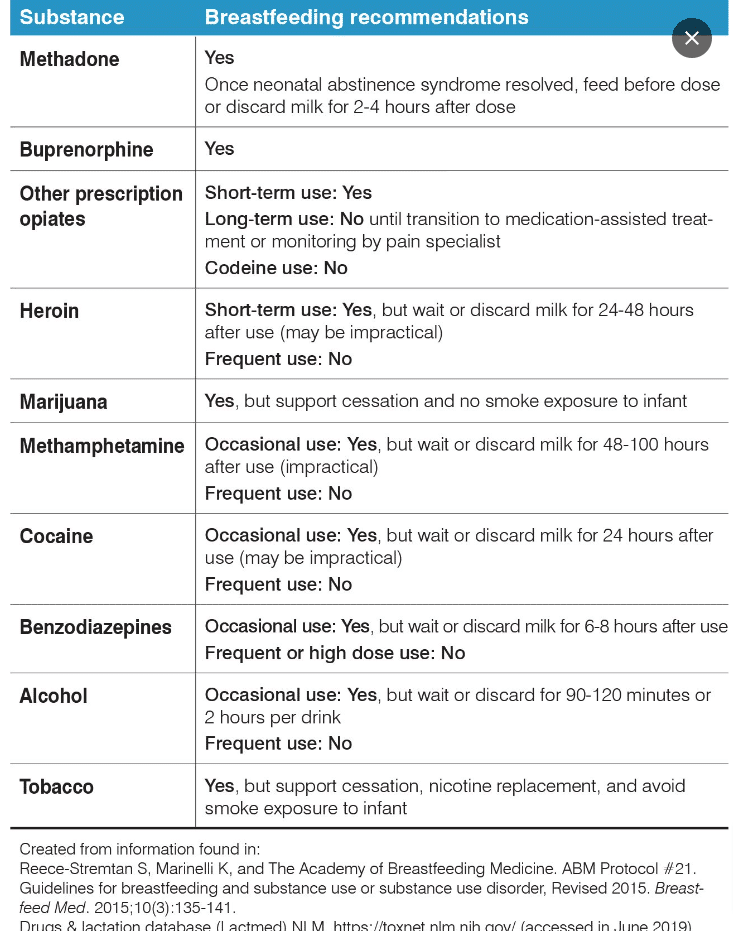
Guidelines for breastfeeding with substance use and substance use disorder
Breastfeeding Benefits
Breastfeeding has tremendous health benefits and forges a very strong bond between the mother and the child early on.
Essential nutrients for the baby
Breast milk provides the perfect amount of fatty acids, lactose, water, and amino acids for your baby’s growth, digestion, and brain development. It also has antibodies that protect infants from bacteria and viruses, helping to fight off infection and diseases.
Positive effects for the mother
Breastfeeding is great for the baby, but it is also beneficial to the mother in many ways. For one thing, breastfeeding releases the hormone oxytocin, which helps shrink the uterus to its pre-pregnancy size, decrease blood pressure, and relieve stress. Women who breastfeed also have a lower risk of breast, ovarian, and uterine cancers, as well as osteoporosis.
Convenient and free
Wherever you and your baby happen to be, breast milk is always available on demand. There’s no formula to buy, no bottles to wash, no need to warm milk, and it costs virtually nothing. In addition, breast milk is always the right temperature, and it makes nighttime feedings a breeze.
Breastfeeding 101
If you decide to breastfeed, these tips and suggestions will help make this bonding experience easier on you and your baby.
Getting started with breastfeeding
It’s important to find a comfortable position for you and your baby before you start feeding. If you’re using the laid-back position, let your baby attach himself to your breast when he is ready. If you are using a different position, you will need control the attachment more than your baby. Once your baby is correctly latched, milk should flow naturally.
Breastfeeding positions
The key to a smooth feeding session is to ensure your baby is positioned in a way that allows him to get all the milk he can. There are several positions, one of which is bound to be suitable for your child:
Common breastfeeding problems
There are several problems associated with breastfeeding, including wrong latching position, pain, inverted nipples, leakage, and yeast infection. Make sure you seek help from your doctor or lactation consultant so you and your baby can begin a comfortable feeding routine.
How Long Does Strep Throat Last in Kids? Timeline + What Helps
Quick Answer: Most children with strep throat start feeling clearly better within 24 to 48 hours after starting the right antibiotic. The sore throat and fever usually improve first, while energy and appetite may take a little longer to come back. Even when a child feels better quickly, the full antibiotic course still matters. When…
Baby Fever: When to Worry vs. Watch — Pediatrician
Quick Answer: A rectal temperature of 100.4°F (38°C) or higher in a baby under 3 months needs prompt medical attention. In older babies, the number still matters, but behavior, breathing, feeding, hydration, and overall appearance matter even more. A baby who is hard to wake, breathing poorly, not drinking, or looking very ill should be…
When Do Babies Start Smiling? What to Expect
Quick Answer: Most babies begin showing a true social smile by the end of the second month, often around 6 to 8 weeks. Before then, smiles are usually reflexive and happen during sleep or while settling. A social smile is different because it happens in response to a face, a voice, or interaction. Parents wait…
When Do Babies Start Sitting Up? Age, Stages + How to Help
Quick Answer: Babies usually begin sitting with support before they can sit fully on their own. Many show the first signs between about 4 and 7 months, and independent sitting often becomes steadier over the following months. The exact timeline varies, but head control, trunk strength, and balance all come first. Sitting is one of…
When Do Babies Start Walking? Normal Age Range + What Helps
Quick Answer: Many babies take first steps sometime around the end of the first year, but there is a normal range. Some start closer to 9 months, many closer to 12 months, and some do not walk independently until later. What matters more than one exact month is the overall pattern of pulling up, cruising,…
Does Bactrim Treat Strep Throat in Children? (What Pediatricians Actually Prescribe)
No — Bactrim (trimethoprim/sulfamethoxazole) does not treat strep throat. It is not recommended, and pediatricians do not prescribe it for this infection. The bacteria that causes strep throat — Group A Streptococcus — is resistant to Bactrim, meaning the drug will not clear the infection and could allow dangerous complications to develop. The correct first-line…
Video Review

Ashlie Thompson
Dr. Nwaneri and his team are absolutely amazing! They’ve been so welcoming and caring with our son. Maria has also been a fantastic lactation consultant. She helped me so much with increasing my supply, and thanks to her my son is nearly exclusively breastfed!