
Motrin dosing for infants and children should be based on weight, not guesswork. Parents also need to know when ibuprofen is appropriate, how often it can be given, and when a child should be checked instead of medicated at home.
This guide helps parents use the dosage chart more safely and understand the key situations where extra caution matters.
Quick Answer
- Use weight-based dosing
- Always measure carefully
- Not every child should get ibuprofen
- Call sooner if: your child is very young, dehydrated, very ill, or you are unsure about the dose

Motrin for Children
Motrin, containing ibuprofen, is a trusted medication commonly used to relieve pain and reduce fever in children. Parents often choose Motrin for its effectiveness and quick action, making it a reliable option for various ailments.
When to Administer Motrin
This medication is suitable for children suffering from headaches, muscle pain, toothaches, and minor injuries. Additionally, it is effective during fevers, particularly after vaccinations. Always consult your pediatrician for specific advice tailored to your child’s age and weight before administering Motrin.
What to Do if Motrin Isn’t Effective
If it appears that Motrin is not working for your child, first confirm that you have administered the appropriate dosage based on their weight. If symptoms persist after a reasonable time, typically 30 minutes to an hour, seek guidance from your healthcare provider. Furthermore, watch for any worsening symptoms or reactions.
Home Remedies to Consider
While medications like Motrin are effective, some parents also explore home remedies for symptom relief. However, be cautious with techniques like applying cold compresses or herbal teas, as they may not always be safe for children. Always consult a healthcare professional before trying new remedies.
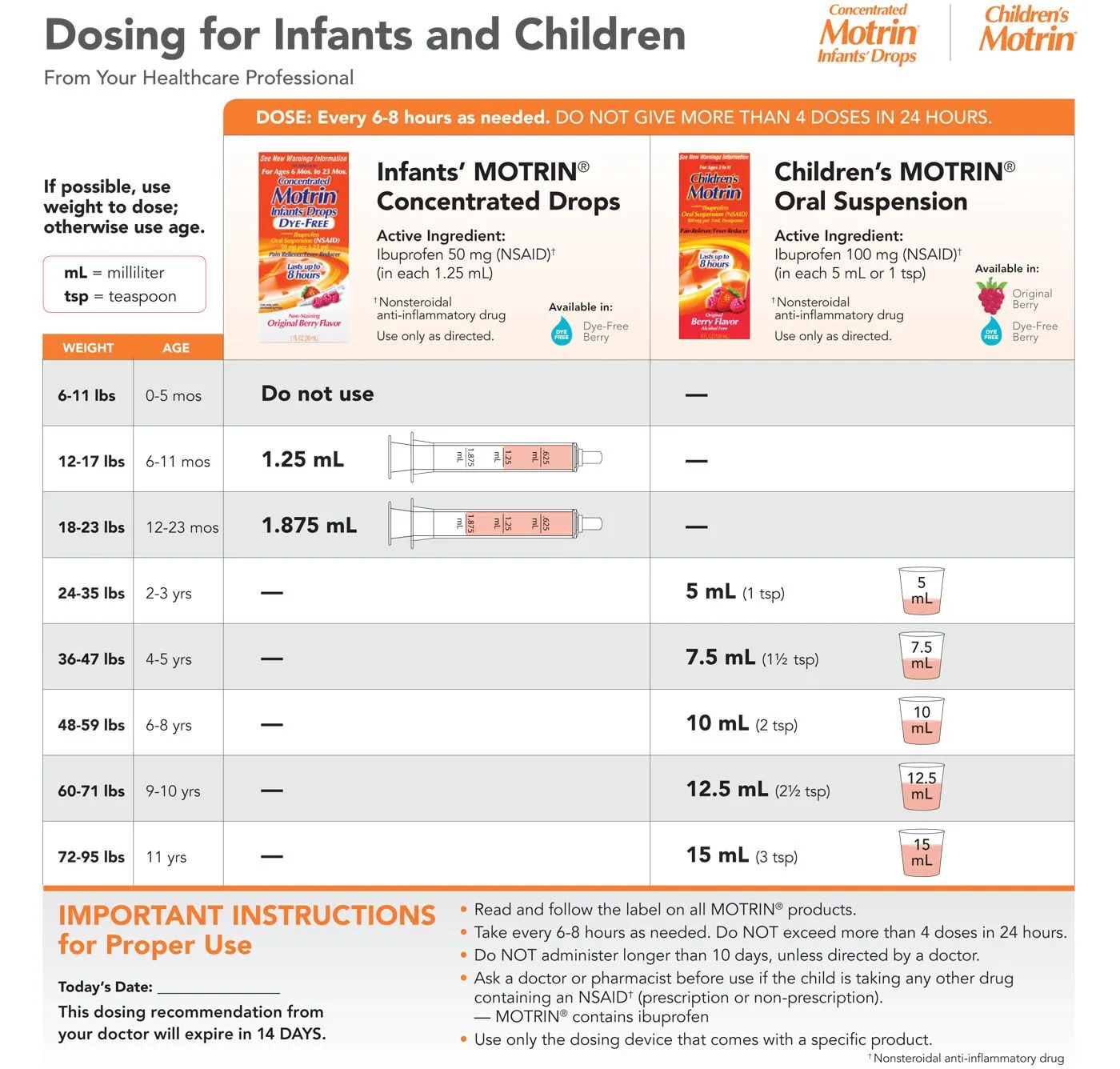
Weight‑Based Motrin Dosing Chart
| Weight | Approximate Age | Infants’ Motrin Concentrated Drops | Children’s Motrin Oral Suspension |
|---|---|---|---|
| 6–11 lbs | 0–5 months | Do not use | — |
| 12–17 lbs | 6–11 months | 1.25 mL | — |
| 18–23 lbs | 12–23 months | 1.875 mL | — |
| 24–35 lbs | 2–3 years | — | 5 mL (1 tsp) |
| 36–47 lbs | 4–5 years | — | 7.5 mL (1½ tsp) |
| 48–59 lbs | 6–8 years | — | 10 mL (2 tsp) |
| 60–71 lbs | 9–10 years | — | 12.5 mL (2½ tsp) |
| 72–95 lbs | 11 years | — | 15 mL (3 tsp) |
Important Motrin Safety Tips
- Not for infants under six months: Ibuprofen should generally be avoided in babies younger than six months unless instructed by your doctor.
- Limit to four doses in 24 hours: Give Motrin every six to eight hours as needed, with no more than four doses in one day.
- Check other medications: Do not give other NSAIDs (like aspirin or naproxen) at the same time. Check cold and flu medications for ibuprofen content.
- Use weight to guide dosing: Accurate weight measurement is crucial because ibuprofen dosing is more sensitive to body size.
- Consult your pediatrician: Children with kidney disease, dehydration, or chronic illnesses may require special guidance. Always ask your doctor if unsure.
When to Call a Doctor
Contact your pediatrician if your child is under six months old with a fever, or if fever persists beyond two days, or if your child exhibits symptoms such as persistent vomiting, severe headache, or lethargy. Children with kidney conditions or who are dehydrated should not receive ibuprofen without medical supervision.
Frequently Asked Questions
For dosing charts that compare both acetaminophen and ibuprofen in one place, visit our combined dosing charts page. If alternating medications is recommended for persistent fever, ensure you track the timing carefully and consult your pediatrician.
Download our printable dosing charts for both Tylenol and Motrin here.
Disclaimer: This guide is for educational purposes and does not replace individual medical advice.