
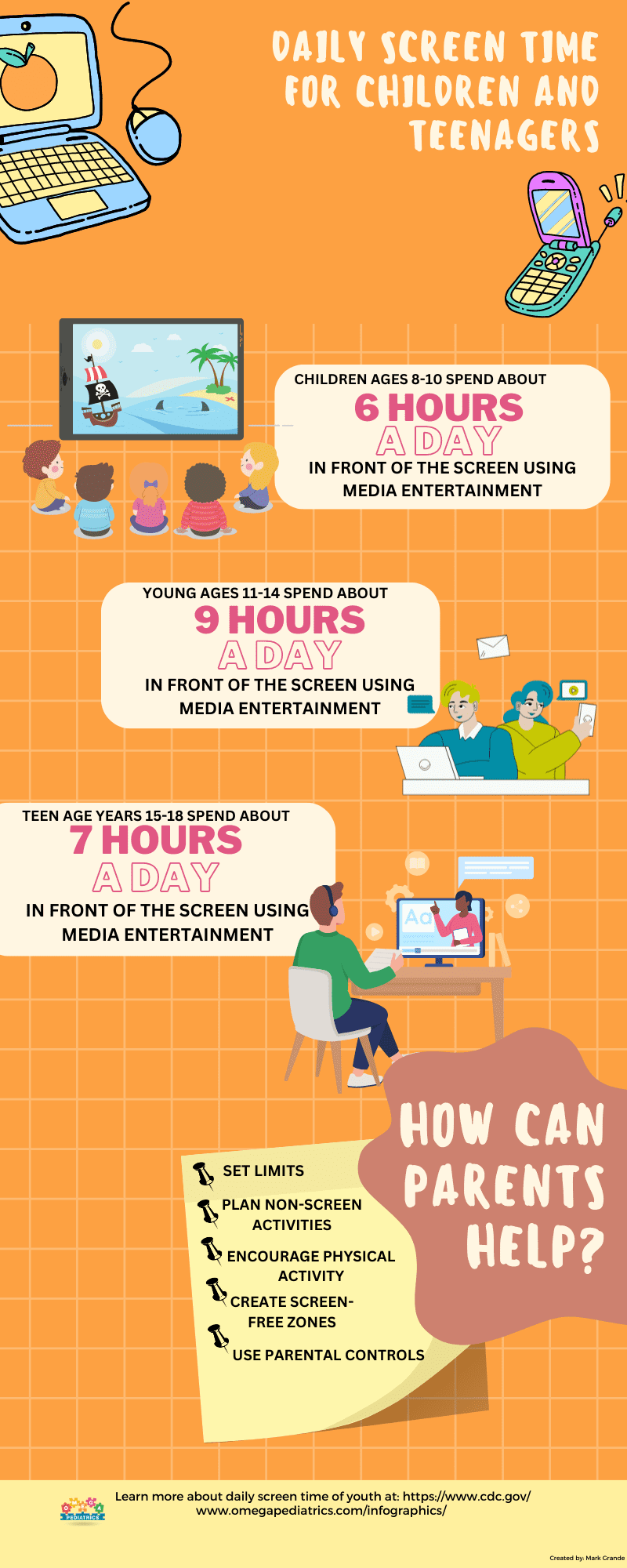
The amount of time children and teenagers spend in front of screens has increased significantly in recent years. Here is a breakdown of daily screen time for different age groups:
Children ages 8-10: On average, children in this age group spend about 6 hours a day engaged in screen-based media entertainment activities. This includes activities such as watching TV shows, playing video games, or using smartphones and tablets.
Young ages 11-14: As children transition into early adolescence, their screen time tends to increase. On average, children ages 11-14 spend about 9 hours a day in front of screens, engaging in various forms of media entertainment.
Teenage years 15-18: During the teenage years, screen time slightly decreases. On average, teenagers ages 15-18 spend about 7 hours a day in front of screens for media entertainment purposes.
Same-day and next-day appointments available.
The impact of excessive screen time on children and teenagers includes sedentary behavior, decreased physical activity, potential negative effects on mental health and well-being, and disrupted sleep patterns.
How can parents help?
Parents play a crucial role in managing and regulating their children’s screen time. Here are some strategies parents can implement to promote healthier screen habits:
- Set limits: Establish clear rules and limits on daily screen time. Communicate these expectations with your children and consistently enforce them.
- Plan non-screen activities: Encourage and plan non-screen activities that engage children in physical, creative, or social pursuits. This can include outdoor play, reading, arts and crafts, or family activities that foster face-to-face interactions.
- Encourage physical activity: Encourage regular physical activity and exercise as an alternative to screen time. Engage in physical activities together as a family and support participation in organized sports or physical hobbies.
- Create screen-free zones: Designate specific areas or times in the home where screens are not allowed, such as during meal times, in bedrooms, or during family conversations. This promotes a healthier balance between screen time and other activities.
- Use parental controls: Utilize parental control settings and software to limit access to inappropriate content, restrict screen time, or monitor online activities. These tools can help parents have more control and ensure a safer digital environment for their children.
- Be a positive role model: Limit your own screen time and demonstrate healthy screen habits. Show your children the importance of balancing screen use with other activities and prioritize face-to-face interactions.
By implementing these strategies, parents can help their children develop healthier screen habits, promote a balanced lifestyle, and create opportunities for varied activities that contribute to their overall well-being and development. Regular communication and open discussions about the benefits and potential risks of screen time are also important in fostering a healthy relationship with media and technology.