Raising children who enjoy healthy foods can feel like a challenge. Between picky eating, busy schedules, and the temptations of sugary snacks, many parents worry about their child’s nutrition. The good news?

With patience, consistency, and some fun strategies, you can help your child develop healthy eating habits that last a lifetime. This guide will explore practical, family-friendly ways to make healthy eating part of your child’s everyday life.
Why Healthy Eating Habits Matter for Kids
Children’s bodies and brains are growing fast, and nutrition plays a key role in their development. A diet rich in fruits, vegetables, lean proteins, and whole grains fuels learning, strengthens the immune system, and supports emotional well-being.
Kids who eat balanced meals are also more likely to stay at a healthy weight and avoid future health problems like diabetes and high blood pressure. When healthy eating becomes a family priority, children naturally adopt good habits without feeling pressured.
Make Healthy Eating Fun and Engaging
Kids are more likely to eat well when the experience feels enjoyable. The goal is to take the pressure off and make food something to look forward to. Try these:
- Colorful plates: Serve meals with a “rainbow” of foods. Bright fruits and vegetables spark curiosity and make meals visually exciting.
- Creative shapes: Use cookie cutters to make fun designs out of sandwiches, cheese, or fruit slices.
- Taste tests: Encourage trying new foods by turning it into a game. Compare the sweetness of apples versus pears or the crunch of carrots versus celery.
Involve Kids in Meal Planning and Cooking
Children are more open to trying new foods when they’ve had a hand in preparing them. Simple tasks like washing vegetables, stirring ingredients, or choosing toppings for homemade pizzas can boost their interest in eating. You can also involve kids in grocery shopping.
Give them the responsibility of picking one new fruit or vegetable each week. This small act gives them a sense of ownership over their food choices.
Build a Positive Mealtime Environment
Healthy eating is about more than the food on the plate. The environment at the table also matters.
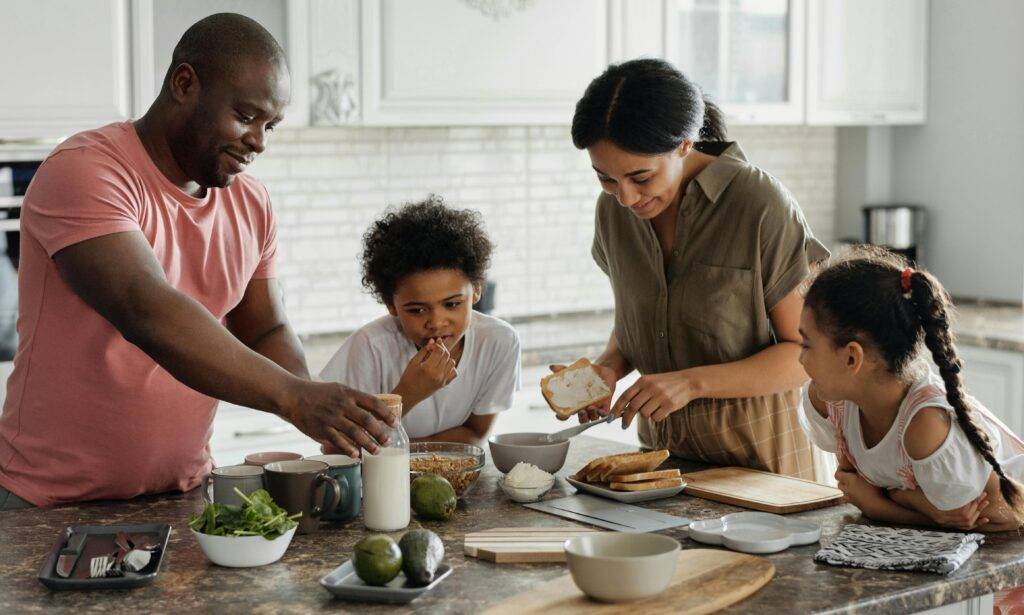
- Eat together as a family: Children learn by watching their parents. When they see you enjoying vegetables and whole foods, they’ll be more willing to try them too.
- Limit distractions: Turn off the TV and put away devices during meals. This helps kids focus on their food and recognize when they’re full.
- Encourage but don’t force: Pressuring kids to eat everything on their plate can backfire. Instead, offer a variety of healthy foods and let them decide how much to eat.
Be a Role Model for Healthy Choices
Kids imitate what they see. If you snack on chips while asking your child to eat carrots, they’ll notice the difference. Model balanced eating by choosing nutritious snacks and making water your go-to drink. When your child watches you enjoy healthy foods, they’re more likely to do the same.
Create Healthy Snack Options
Snacking is part of childhood, but it doesn’t have to mean processed or sugary foods. Keep nutritious choices within easy reach. By keeping these snacks ready, you reduce the chances of kids reaching for chips or cookies. Some great options include
- Apple slices with peanut butter
- Yogurt topped with berries
- Whole-grain crackers with cheese
- Carrot sticks with hummus
Limit Sugary Drinks and Processed Foods

Juice, soda, and flavored drinks may seem harmless, but they can pack in a lot of sugar. Instead, encourage water and milk as everyday drinks. Save juice for special occasions, and when possible, dilute it with water. Processed snacks and fast food are convenient, but should not become daily habits.
Teaching kids to enjoy home-cooked meals gives them a healthier foundation.
Make Small, Consistent Changes
Building lifelong eating habits doesn’t happen overnight. Start with small, realistic changes. Consistency is key. Over time, these small steps add up to big improvements.
- Add one extra serving of vegetables to dinner.
- Swap white bread for whole-grain bread.
- Replace a sugary drink with water once a day.
Encourage Open Conversations About Food
Kids may ask why certain foods are “good” or “bad.” Instead of labeling foods, explain how they help the body. Framing food as fuel for their favorite activities makes the idea more relatable and less restrictive. For example:
- “Milk helps your bones grow strong.”
- “Carrots help your eyes see better.”
- “Fish makes your brain work faster.”
Easy Kid-Friendly Recipes for Healthy Eating
Cooking at home doesn’t have to be complicated. Here are simple, nutritious recipes your kids will actually enjoy. These recipes are quick and fun, giving kids the chance to explore new flavors without fuss.
Same-day and next-day appointments available.
- Mini Veggie Pizzas: Use whole wheat pita bread, and top with tomato sauce, shredded cheese, and colorful vegetables. Bake until the cheese melts.
- Banana Pancakes: Mash bananas, mix with eggs, and cook like pancakes. Sweet, soft, and full of protein.
- Rainbow Smoothies: Blend spinach, bananas, berries, and milk for a naturally sweet and colorful drink.
- Turkey and Cheese Roll-Ups: Roll slices of turkey around cheese sticks for a protein-rich snack.
- Homemade Trail Mix: Mix nuts, raisins, whole-grain cereal, and a sprinkle of dark chocolate chips.
- Sweet Potato Fries: Slice sweet potatoes, toss with olive oil and paprika, and bake until crispy.
- DIY Taco Night: Let kids build their tacos with lean ground turkey, beans, lettuce, salsa, and cheese.
- Fruit Kabobs: Skewer strawberries, grapes, melon, and pineapple for a fun and portable snack.
- Egg Muffins: Whisk eggs with veggies and cheese, pour into muffin tins, and bake.
- Apple Donuts: Slice apples into rings, spread peanut butter, and sprinkle with granola.
Powerful Tips for Family Meals That Encourage Healthy Eating
Making mealtimes meaningful helps kids form a positive connection with food for healthy eating. These habits create a relaxed, supportive atmosphere where children feel free to explore new foods at their own pace. Here are strategies that really work:
- Schedule Regular Family Meals – Set a consistent dinner time whenever possible. Kids thrive on routine.
- Serve Family-Style Meals – Place healthy dishes on the table and let children serve themselves. It gives them control and reduces power struggles.
- Offer Choices, Not Ultimatums – Instead of saying “Eat your broccoli,” try “Would you like broccoli or carrots with dinner?”
- Make Meals Screen-Free – Encourage conversation and mindful eating by putting away phones and turning off the TV.
- Practice Patience – It can take 10–15 tries before a child accepts a new food. Keep offering without pressure.
- Celebrate Small Wins – Praise your child for tasting something new, even if they don’t finish it.
- Keep Portions Kid-Sized – Children need smaller servings than adults. Allow them to ask for seconds instead of overloading their plates.
7-Day Healthy Meal Plan for Kids
This simple, balanced meal plan is designed to be flexible. You can swap out items based on your child’s preferences, allergies, or what’s available in your kitchen.
Day 1
- Breakfast: Oatmeal with bananas and a drizzle of honey
- Snack: Apple slices with peanut butter
- Lunch: Whole grain turkey and cheese sandwich, baby carrots, and grapes
- Snack: Yogurt with blueberries
- Dinner: Baked chicken, brown rice, and steamed broccoli
Day 2
- Breakfast: Whole-grain waffles topped with strawberries
- Snack: Cheese cubes and whole grain crackers
- Lunch: Chicken quesadilla with black beans and salsa
- Snack: Celery sticks with hummus
- Dinner: Spaghetti with lean ground turkey, side salad, and garlic bread
Day 3
- Breakfast: Scrambled eggs with spinach and whole wheat toast
- Snack: Trail mix with nuts, raisins, and dark chocolate chips
- Lunch: Tuna salad wrap with cucumber slices and an orange
- Snack: Greek yogurt parfait with granola
- Dinner: Grilled salmon, roasted sweet potatoes, and green beans
Day 4
- Breakfast: Smoothie with banana, spinach, and berries
- Snack: Rice cakes topped with almond butter
- Lunch: Turkey chili with cornbread and a side of fruit
- Snack: Baby carrots with ranch dip
- Dinner: Homemade pizza on whole wheat crust with veggie toppings
Day 5
- Breakfast: Whole-grain pancakes with sliced peaches
- Snack: Yogurt smoothie pouch
- Lunch: Egg salad sandwich, cherry tomatoes, and apple slices
- Snack: Cheese stick and grapes
- Dinner: Baked cod, quinoa, and roasted zucchini
Day 6
- Breakfast: Cereal with milk and sliced banana
- Snack: Apple “donuts” (apple rings with peanut butter and granola)
- Lunch: Chicken noodle soup with whole wheat crackers
- Snack: Popcorn (lightly salted, air-popped)
- Dinner: Turkey tacos with lettuce, tomatoes, cheese, and salsa
Day 7
- Breakfast: Yogurt with strawberries and a sprinkle of granola
- Snack: Orange slices and a cheese stick
- Lunch: Whole wheat pita stuffed with hummus, cucumbers, and shredded chicken
- Snack: Mixed fruit kabobs
- Dinner: Grilled chicken skewers with rice and roasted vegetables
When to Seek Help from a Pediatrician About Healthy Eating
If your child consistently refuses to eat a variety of foods or struggles with growth and energy, it may be time to consult a pediatrician. At Omega Pediatrics, our team supports families in building healthy routines, from nutrition guidance to overall wellness strategies.
You may also want to check out our post on How Family Meals Build a Healthy Relationship and Support Positive Nutrition & Social Development in Children
Frequently Asked Questions About Kids and Healthy Eating
1. What if my child refuses vegetables?
It’s common for kids to resist veggies at first. Keep offering them in different forms—raw, steamed, roasted, or even blended into smoothies. Sometimes pairing them with dips like hummus or yogurt makes them more appealing. The key is persistence without pressure for healthy eating.
2. How much sugar is okay for kids?
The American Heart Association recommends that children under 18 consume less than 25 grams (6 teaspoons) of added sugar per day. Limiting soda, candy, and sweetened cereals is the best way to stay within that limit. Encourage naturally sweet foods like fruit instead. This is the essence in healthy eating.
3. Should I let my kids snack between meals?
Yes, healthy snacks can be part of a balanced diet. Children have smaller stomachs and often need snacks to stay energized. Stick to nutrient-dense options like fruit, yogurt, cheese, or whole-grain crackers instead of chips or candy.
4. How do I handle picky eaters?
Stay calm and avoid turning meals into battles. For healthy eating, offer a variety of foods and let your child decide what and how much to eat. You can also make food fun—cutting sandwiches into shapes or making fruit kabobs can reduce resistance.
5. Is it bad to reward kids with food?
For healthy eating, using food as a reward (like giving candy for good behavior) can create unhealthy emotional associations. Instead, reward kids with experiences—like extra playtime, stickers, or choosing a fun activity.
6. How can I get my child to drink more water?
Make water accessible by keeping a water bottle within reach. For healthy eating, flavoring it with slices of lemon, cucumber, or berries can also make it more exciting. Modeling the habit yourself is one of the most effective ways to encourage your child to drink more water.
7. What if my child is underweight or overweight?
Every child grows differently. If you’re worried about your child’s growth or eating patterns, schedule a check-up with your pediatrician. At Omega Pediatrics, we work with families to assess growth, nutrition, and lifestyle habits to ensure kids are thriving.
Plant the Seeds of Healthy Eating

Encouraging healthy eating in kids doesn’t happen overnight, but with consistent effort, it becomes second nature. The key is making food and meals fun, involving kids in the cooking, modeling balanced choices as a parent, and creating a supportive environment.
This sets the stage for lifelong wellness—giving your child the tools to make better food choices for life. Remember, you don’t need to do everything at once. The goal of healthy eating isn’t perfection—it’s progress. Every small step toward healthier eating is a victory worth celebrating.
Start with one small change—like adding a veggie to dinner or swapping soda for water—and build from there. This healthy eating guide gave you practical strategies, family-friendly recipes, tips for stress-free meals, answers to common concerns, and even a 7-day plan to get started.
For more family wellness tips, check out Omega Pediatrics’ resources—our goal is to help your children thrive in every aspect of their health. Check out our post on The Essential Guide to Well-Child Care Visits. We help bring structure to your child’s day.
Healthy eating habits built today will shape tomorrow’s health, energy, and happiness.