
Potty training usually goes more smoothly when it starts around your child’s readiness, not just around age alone. The biggest clues are interest, body awareness, and the ability to follow simple routines.
This guide explains when many children start potty training, how to spot readiness signs, and which tips tend to work best.
Quick Answer
- There is no single perfect age
- Readiness matters more than pressure
- Many children do best with a calm, consistent routine
- Call sooner if: there is pain, severe stool withholding, or major regression concerns
Table of Contents
By recognizing the signals that your toddler is ready to master the art of independent bathroom visits, we’ll equip you with all the knowledge and tools for your child’s successful transition.
 The Best Age for Potty Training
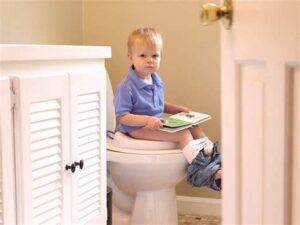
Every child is unique. The perfect age to toilet train varies for each child, but there are milestones to consider.
Age 1: Most babies stop doing poo at night.
Age 2: Some children may be dry during the day, although it’s still early.
Age 3: Most children are dry, but accidents can still occur.
Age 4: Most children are reliably dry during the day.
Most parents train their kids for toilet training between ages 3 and 5. However, it’s worth emphasizing that forcing a child to use a potty because their age says so isn’t effective; they need to be ready.
How to Know if Your Toddler is Ready for Potty Training
Before diving into toilet training, ensure that your child is ready for this big step. While every child is different, some common signs indicate a toddler’s readiness. Check out for the following signals:
Physical Readiness
Your child can walk steadily, sit down, and get up on their own. They can also pull their pants up and down with minimal assistance. This physical capability is important as it allows them to navigate the step-by-step process with ease.
Increased Awareness
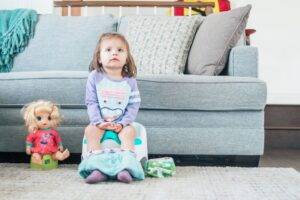
Your child shows awareness of their bodily functions, such as expressing discomfort when their diaper is wet or soiled or showing interest when it’s time to use the toilet. This indicates that they’re starting to express what they feel and the need to use the bathroom.
Long Dry Periods
Your child’s diapers stay dry for longer periods, indicating there’s an improvement in bladder control. This positive sign indicates that they’re developing the ability to hold urine and are becoming more aware of their body’s signals.
Developed Listening and Communication Skills
Your child can communicate their needs and understand simple instructions. He already knows how to express himself when he needs to go to the bathroom or when he has already done so (and already made a mess)!
These effective communication skills between you and your child could significantly help during the process.
Toilet Training: How to Potty Train Your Child
Once you believe that your child is ready, work on the practical aspects of potty training. Here’s a step-by-step guide to help you navigate your child through the process:
Equipment Needed
Before you start to train, ensure you have the essential equipment ready. You will need a child-sized potty chair or a potty seat that fits securely on your regular toilet.
Some children may feel more comfortable with a potty chair, while others prefer using a seat on the big toilet. Let your child choose what they prefer to encourage their independence and participation.
 How to Get Started With Potty Training

The key to successful potty training is creating a routine and establishing clear expectations for your child. Here’s how to teach your child how to use the toilet:
1. Introduce the concept of using the toilet.
Talk to your child about using the potty and explain its purpose. Read books or watch videos to make it more relatable and fun. This introduction helps your child understand the purpose behind the potty and reduces any anxiety or confusion.
2. Demonstrate and explain.
Show your child how to use the potty by using simple and clear language. Allow them to watch you or an older sibling use the toilet so they can visualize the process. This practical approach helps them grasp the steps, making it easier for them to imitate.
3. Establish a toilet routine.
Encourage your child to sit on the potty at regular intervals, such as after meals or before bath time. This helps them develop a habit and associate the potty with certain times of the day.
Consistency in using the toilet reinforces the behavior and lets them learn when to use the potty.
4. Use positive reinforcement.
Celebrate every small success and offer praise and rewards when your child uses the potty successfully. This positive reinforcement encourages and boosts confidence.
Create a reward system, such as a sticker chart, where they earn stickers for each successful use of the potty, and a certain number of stickers leads to a small reward or privilege. Also, the sticker chart documents another milestone for your child.
5. Be patient and consistent.
Remember that accidents happen and are part of the learning process. Stay calm, clean up without making a fuss, and there’s always next time. Patience and consistency are keys to helping your child feel comfortable and supported throughout the journey.
Same-day and next-day appointments available.
Toilet Training at Night
Nighttime training may take longer than daytime training. Here are a few tips to note:
- Use training pants or bed-wetting mats to protect the bedding and mattress during the transition.
- Reduce fluid intake before bedtime and encourage your child to use the potty right before going to sleep.
- Be patient and supportive if accidents occur at night, as it’s a normal part of the process.
Top Tips and Tricks for a Smooth Potty Training Journey
Here are some additional tips for potty training and tricks to make the toilet training journey smoother and more enjoyable for both you and your child:
Dress Your Child Properly for Potty Training
Dressing up correctly can make your child’s learning easier. Opt for clothing that’s easy for your child to pull up and down independently. Elastic waistbands or loose-fitting pants work well during this phase.
The choice of clothing enables your child to manage their clothing on their own, promoting independence and minimizing any frustrations.
Make Potty Training Fun and Enjoyable
Let your kids choose special underwear or toilet paper with their favorite characters. Adding an element of fun and personalization to the toilet training process can make it more engaging and exciting for your child.
Be Mindful of Constipation
Ensure your child has a balanced diet with fiber-rich foods and plenty of fluids to avoid constipation. This is because constipation can make toilet training more challenging and uncomfortable for your child.
Promote a healthy diet and hydration to support regular bowel movements and overall comfort during the training.
Encourage Independence
Let your child take the lead. Let them choose when they want to use the potty, empowering them and promoting self-confidence. Giving children a sense of control and independence fosters a positive attitude toward using the potty.
Equally important, encouraging independence when using the toilet is a key element in helping your child develop self-care skills.
Avoid Toilet Accidents
Peeing or pooping accidents are a normal part of the process. So, it’s important to handle them with patience and understanding. To minimize accidents and create a smoother experience, consider the following strategies:
- When your child indicates the need to use the potty, respond promptly by taking them there immediately.
- Gently remind your child to use the potty if it’s been a while since their last use.
- Keep the potty in a convenient location and remove any obstacles that might hinder your child from reaching and using it independently.
When to Seek Medical Help
In most cases, your child learns to use the potty successfully within a few months of starting training. But if you encounter persistent difficulties or worrisome symptoms, it may be time to seek advice from your child’s pediatrician.
Here are some situations where consulting a doctor may be the best route:
1. No Progress
Your child shows no interest in or progress in potty training after several months of consistent efforts. This may indicate underlying issues or readiness concerns that require professional evaluation. Counseling or therapy might be highly considered.
2. Pain and Discomfort
Your child exhibits pain or discomfort while urinating or having bowel movements. These symptoms may suggest an underlying medical condition that needs to be addressed with appropriate treatment. Reach out for medical help immediately.
3. Problems and Accidents
Your child experiences frequent accidents or regression after making initial progress. Sudden regressions or persistent difficulties may warrant a closer look to identify any underlying factors. These factors may be hindering the progress of your baby.
4. Health Issues
Your child may have ongoing health issues, including constipation or urinary tract infections (UTIs). Chronic constipation or recurrent UTIs may require intervention and management to address the underlying causes and ensure proper potty training.
If your child needs toilet training help or is experiencing worrisome symptoms from potty training or urinating in general, reach out to Omega Pediatrics. We will conduct a clinical assessment and offer comprehensive pediatric care. You’re in good hands!
Potty Train Your Baby
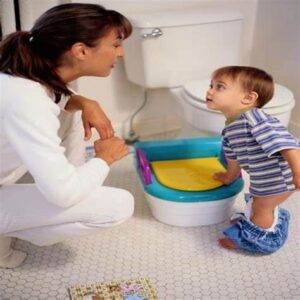
Potty training is an important milestone for child development, and with the right approach and consistency, you can make this transition a successful one.
Knowing the signs of readiness, providing the necessary equipment, establishing a routine, following toilet training help tips, and offering encouragement and support can guide your child through the exciting journey of becoming independent in using the toilet.
Every child is unique, and the pace of potty training may vary. Be patient, flexible, and understanding as your child learns this new skill. Celebrate their successes, handle setbacks with patience, and gradually increase their independence.
With time, consistency, and a whole lot of love and patience, your child will proudly proclaim, “No more nappies for me, Mom! Goodbye, nappies!”
If, for one reason or another, you might experience any challenges in potty training your toddler, your provider at Omega Pediatrics is happy to help. We gladly welcome you to our clinic in Roswell, Georgia. Come book an appointment with us.
FAQ
u003cstrongu003eWhat is the best age for potty training?u003c/strongu003e
Potty training can begin as early as age 1, with most children becoming reliably dry during the day by age 4. However, readiness varies for each child, and it’s important not to force training based solely on age but rather on signs of readiness.
u003cstrongu003eHow can I tell if my toddler is ready for potty training?u003c/strongu003e
Look for physical readiness signs like being able to walk steadily and pull pants up and down, increased awareness of bodily functions, longer dry periods in diapers, and developed listening and communication skills.
u003cstrongu003eWhat equipment do I need to start potty training?u003c/strongu003e
Essential equipment includes a child-sized potty chair or a securely fitting seat for the regular toilet. Letting your child choose which they prefer can encourage their independence and participation in the process.
u003cstrongu003eHow do I get started with potty training?u003c/strongu003e
Begin by introducing the concept of using the toilet, demonstrating and explaining the process, establishing a toilet routine, using positive reinforcement, and being patient and consistent throughout the journey.
u003cstrongu003eWhen should I seek medical help for potty training issues?u003c/strongu003e
If your child shows no progress or interest in training, experiences pain or discomfort while urinating or having bowel movements, has frequent accidents or regression, or has ongoing health issues like constipation or UTIs, it’s time to consult a pediatrician for guidance and support.
What is Elimination Communication?
Elimination communication (EC) is a parenting practice wherein caregivers observe and respond to a baby’s natural cues for needing to relieve themselves. This involves recognizing signs like certain facial expressions, body movements, or specific sounds that indicate the baby needs to urinate or defecate.u003cbru003eOnce these cues are identified, the caregiver holds the baby over a potty, toilet, or any suitable receptacle and often makes a distinct sound (like a whistle or hiss) to associate the action with elimination. Over time, the baby learns to signal their needs consistently, and may even respond to the caregiver’s prompts, reducing the reliance on diapers.u003cbru003eBenefits of Elimination Communication:u003cbru003eu003cstrongu003eAccelerated Potty Training:u003c/strongu003e Many u003cmarku003eparentsu003c/marku003e believe that EC can shorten the length of traditional potty training periods.u003cbru003eu003cstrongu003eEco-Friendly:u003c/strongu003e Using fewer diapers means less waste, making EC a greener option.u003cbru003eu003cstrongu003eCost-Effective:u003c/strongu003e With reduced diaper usage, families can save money on diaper purchases.u003cbru003eu003cstrongu003eHealthier Skin:u003c/strongu003e Since the baby spends less time in a soiled diaper, there’s a lower risk of diaper rash and associated skin issues.u003cbru003eu003cmarku003eParentsu003c/marku003e may opt to use diapers as a supplemental measure, particularly during nighttime or outings, instead of as the primary method for managing their baby’s waste. This technique encourages a more intuitive and connected approach to toilet training, aligning with a baby’s natural bodily rhythms.
When Is the Best Time to Start Elimination Communication?
Determining the best time to start elimination communication is more flexible than you might think. While some u003cmarku003eparentsu003c/marku003e jump in right from birth, seamlessly integrating it into their daily routine, others wait until their baby is a few months old.u003cbru003eImmediate or Later Start?u003cbru003eStarting right after birth can help normalize the practice as part of everyday life. However, many u003cmarku003eparentsu003c/marku003e find it practical to begin a few months later when they feel more settled into a routine.u003cbru003ePart-Time vs. Full-Timeu003cbru003eYour schedule and lifestyle will largely dictate whether you choose part-time or full-time elimination communication. For instance:u003cbru003eu003cstrongu003eFull-Time:u003c/strongu003e Ideal for primary caregivers who are home most of the day.u003cbru003eu003cstrongu003ePart-Time:u003c/strongu003e Suits families where caregivers work during the day. They can focus on elimination communication in the evenings and weekends.u003cbru003eChildcare Considerationsu003cbru003eIt’s worth discussing elimination communication with your childcare provider. While some are open to collaborating, the extra time and effort required might not always be feasible in a busy daycare environment.u003cbru003eGeneral Timelineu003cbru003eTypically, many babies continue to use diapers as a backup until they are between 9 to 16 months old, regardless of when elimination communication begins.u003cbru003eIn conclusion, the optimal time to start elimination communication is when it fits best into your family’s routine and feels manageable for you. Flexibility and patience are key.
What are the Benefits of Elimination Communication?
u003ca href=u0022https://www.parents.com/toddlers-preschoolers/potty-training/tips/elimination-communication-how-to-potty-train-without/u0022 target=u0022_blanku0022 data-type=u0022linku0022 data-id=u0022https://www.parents.com/toddlers-preschoolers/potty-training/tips/elimination-communication-how-to-potty-train-without/u0022 rel=u0022noreferrer noopener nofollowu0022u003eElimination communicationu003c/au003e, often referred to as diaperless toilet training, brings several distinct advantages for both u003cmarku003eparentsu003c/marku003e and babies.u003cbru003eu003cstrongu003e1. Accelerates Potty Training:u003c/strongu003e This method is believed to quicken the potty training process, helping your child recognize and respond to their body’s signals earlier.u003cbru003eu003cstrongu003e2. Eco-Friendly:u003c/strongu003e By significantly reducing the number of diapers used, elimination communication is an environmentally conscious choice. This reduction means fewer diapers in landfills, contributing to a greener planet.u003cbru003eu003cstrongu003e3. Cost-Effective:u003c/strongu003e Fewer diapers also translate to cost savings. u003cmarku003eParentsu003c/marku003e can invest less in disposable or even cloth diapers, making this approach budget-friendly.u003cbru003eu003cstrongu003e4. Reduces Diaper Rash:u003c/strongu003e With less time spent in soiled diapers, the risk of diaper rashes decreases. Your baby will enjoy more comfort and better skin health.u003cbru003eAdditional Perksu003cbru003eu003cstrongu003eEnhanced Bonding:u003c/strongu003e This method requires u003cmarku003eparentsu003c/marku003e to be highly attuned to their child’s needs, fostering a stronger connection and better communication.u003cbru003eu003cstrongu003eEarly Independence:u003c/strongu003e As children become more aware of their bodily functions, they often gain confidence and a sense of independence sooner.u003cbru003eBy embracing elimination communication, u003cmarku003eparentsu003c/marku003e can enjoy these notable benefits while promoting a healthier, more eco-conscious lifestyle.