Your Baby is Silent—And You’re Starting to Panic
Your friend’s baby just said “mama” at 9 months. Your cousin’s kid won’t stop chattering at 15 months. But YOUR baby? Still mostly babbling and making sounds.
You’re watching other babies talk while yours stays quiet. And you’re wondering: Is something wrong? Should I be worried?
Here’s what you need to know right now: Every baby develops differently. And talking timelines vary WAY more than you think.
But you still want answers. When do kids start talking? When should baby start talking? And when is it actually time to worry?
In this comprehensive guide, I break down exactly when babies start talking, what’s normal at every age, and the warning signs that mean you should call the doctor.
Let’s figure out if your baby is on track.
When Do Babies Start Talking? (The Real Timeline)
Here’s the short answer: Most babies say their first real words between 10 to 14 months old.
But here’s what nobody tells you: “Talking” starts WAY before actual words.
Your baby has been learning to talk since they were born. Every coo, babble, and sound is practice for real speech.
Let me break down the REAL timeline of when kids start talking.
Birth to 3 Months: The Beginning Sounds
What babies do:
- Make cooing sounds (“ooh,” “ahh”)
- Cry in different ways for different needs
- Start making gurgling sounds
- Turn toward voices
- Smile when you talk to them
What this means: Your baby is learning that sounds get responses. This is the foundation for talking.
4 to 6 Months: Babbling Begins
What babies do:
- Start babbling (“ba ba ba,” “ma ma ma”)
- Make razzing sounds (blowing raspberries)
- Laugh out loud
- Respond to their name
- Make sounds back when you talk to them
What this means: Your baby is practicing the sounds they’ll use for real words. This is HUGE progress, even though it’s not real talking yet.
7 to 12 Months: Almost There!
What babies do:
- Babble with more variety (“ba da ma”)
- Use gestures (waving, pointing)
- Say “mama” or “dada” (but might not know what it means yet)
- Understand simple words like “no” and “bye-bye”
- Try to imitate the sounds you make
What this means: Language is EXPLODING in their brain even if you can’t hear it yet.
When do babies start talking for real? Usually, between 10 to 14 months, you’ll hear that first intentional word.
12 to 18 Months: First Real Words
What toddlers do:
- Say 1 to 6 words clearly
- Understand way more than they can say (50+ words!)
- Point to things they want
- Follow simple instructions (“Give me the ball”)
- Shake head “no”
Average at 12 months: 1 to 3 words
Average at 18 months: 10 to 25 words
What this means: Your toddler knows SO many words in their head. They just can’t say them all yet.
18 to 24 Months: The Talking Explosion

What toddlers do:
- Start putting 2 words together (“more milk,” “daddy go”)
- Learn new words every single day
- Can say 50 to 100+ words
- Point to body parts when asked
- Start using “mine” constantly
What this means: This is when talking really takes off. It’s called the “language explosion” for a reason.
2 to 3 Years: Full Sentences
What toddlers do:
- Speak in 3- to 4-word sentences
- Use pronouns (I, me, you)
- Ask “what” and “why” questions NON-STOP
- Sing simple songs
- Tell you about their day
What this means: Your child is officially a talker now. Get ready for constant chatter!
When Should Baby Start Talking? (What’s Normal vs What’s Not)
This is the question that keeps moms up at night. Here’s the truth: There’s a WIDE range of normal.
Some babies say their first word at 8 months. Others don’t talk until 15 or 16 months. Both can be completely normal.
What’s NORMAL:
✅ First word anywhere from 10 to 16 months
✅ Only saying a few words at 15 months
✅ Understanding way more than they can say
✅ Using gestures and pointing to communicate
✅ Babbling constantly, even without real words
✅ Boys talking later than girls (this is common!)
✅ Second or third children talking later (they let siblings talk for them)
When Should You Worry?
Call your pediatrician if: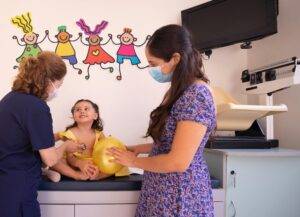
⚠️ By 12 months: No babbling, no gestures (no waving or pointing), doesn’t respond to name
⚠️ By 15 months: No words at all, not even trying to communicate
⚠️ By 18 months: Fewer than 10 words, doesn’t point to show you things
⚠️ By 2 years: Fewer than 25 words, doesn’t combine 2 words (“more juice”)
⚠️ By 2.5 years: Strangers can’t understand at least half of what they say
⚠️ At any age:
- Stops using words they used to say
- Doesn’t respond when you call their name
- Doesn’t make eye contact
- Seems frustrated but won’t try to communicate
- Doesn’t seem to understand simple instructions
Trust your gut, mama. If something feels off, call your pediatrician. It’s better to check and have everything be fine than to wait.
When Do Toddlers Start Talking in Sentences?
This is the next big milestone parents worry about.
Most toddlers start putting 2 words together around 18 to 24 months. “More milk.” “Daddy go.” “Big dog.”
By age 2 to 3, most kids speak in 3- to 4-word sentences. “I want more juice.” “Daddy go to work.” “That’s a big dog!”
What’s Normal for 2-Year-Olds:
- Says 50 to 100+ words (some say way more!)
- Puts 2 to 3 words together
- You understand about 50% of what they say
- Strangers understand some words
- Name familiar objects
- Uses “me” and “mine” constantly
What’s Normal for 3-Year-Olds:
- Speaks in full sentences (4 to 5 words)
- Tells simple stories
- Asks questions constantly (“Why?” “What’s that?”)
- You understand almost everything they say
- Strangers understand most of what they say
- Knows their name and age
Every child is different. Some 2-year-olds talk in paragraphs. Others barely string sentences together. Both can be totally normal.
Why Some Kids Start Talking Later (And It’s Usually Fine)
If your child isn’t talking as much as other kids, you’re probably freaking out. Here are common reasons for late talking that are usually NOT a problem:
1. They’re Boys
Boys typically talk later than girls. It’s just how their brains develop.
Girls often say their first word around 12 months. Boys might not talk until 14 or 15 months. Both are normal.
2. They Have Older Siblings
Second, third, and fourth kids often talk later. Why? Big siblings do all the talking for them. Older siblings translate baby’s needs.
Older siblings answer questions for them. So baby doesn’t NEED to talk as much. This is super common and usually catches up by age 3.
3. They’re Bilingual
Kids learning two languages often talk a little later. Their brains are working double time!
They might mix languages at first. They might seem “behind” in both languages. But by age 3 or 4, they usually catch up and speak BOTH languages fluently.
This is actually amazing for their brain development.
Same-day and next-day appointments available.
4. They’re Just Focused on Other Skills
Some babies focus on physical skills first. They walk early but talk late. Other babies are chatty but slow to walk.
Babies can’t master everything at once. If your baby is hitting other milestones, late talking might just mean they’re focused elsewhere.
5. Their Personality
Some kids are just quieter. Some are observers. Some are cautious about trying new things (including words).
Shy or cautious kids might understand TONS of words but won’t say them until they’re sure they can do it perfectly. This is a personality thing, not a problem.
How to Help Your Baby Start Talking (Things You Can Do TODAY)
Want to encourage your baby to talk? Here are proven strategies.
1. Talk to Your Baby Constantly
Narrate everything you do.
“Now we’re changing your diaper. Let’s put on a clean diaper. There we go!” “Look, it’s a red ball! The ball is round. Can you touch the ball?”
The more words your baby hears, the faster they learn to talk.
2. Read Books Every Single Day
Reading builds vocabulary faster than anything else. Even 10 minutes a day makes a huge difference.
Tips for reading with babies:
- Point to pictures and name them
- Let baby turn pages (even if they rip them)
- Use different voices for characters
- Read the same books over and over (repetition helps!)
- Ask questions (“Where’s the dog?”)
3. Sing Songs and Nursery Rhymes
Music and rhythm help babies learn language patterns. Do the hand motions, too. Babies love it, and it helps them remember.mSing:
- “Twinkle Twinkle Little Star”
- “Itsy Bitsy Spider”
- “Wheels on the Bus”
- “Old MacDonald”
4. Respond When Baby Makes Sounds
When baby babbles, babble back! This teaches baby that communication is a back-and-forth thing.
Baby: “Ba ba ba”
You: “Ba ba ba! Yes! You’re talking!”
5. Give Baby Time to Respond
Don’t rush to give baby what they want. Wait a beat. This encourages baby to TRY to say words even if they can’t yet.
Baby points at the cup
You: “Do you want your cup? Say ‘cup.'”
Wait 5 seconds
Then give them the cup
6. Don’t Use Baby Talk
Use real words, not baby words. Say “dog”, not “doggy.” Say “bottle” not “baba.”
BUT do use a sing-song voice. That high-pitched “parent voice” actually helps babies learn!
7. Limit Screen Time
The American Academy of Pediatrics recommends:
- Under 18 months: No screen time (except video calls)
- 18 to 24 months: Very limited, high-quality programming ONLY with a parent
Screens don’t teach babies to talk. Only real human interaction does.
8. Play Simple Games
- Peek-a-boo (teaches turn-taking)
- Pat-a-cake (teaches rhythm and words)
- Where’s your nose? (teaches body parts)
- What does the cow say? (teaches animal sounds)
These games are fun AND educational.
When Do Children Start Talking Clearly?
Parents often worry: “My child talks, but nobody understands them!” Here’s what’s normal:
Age 2: You understand about 50% of what they say. Strangers understand maybe 25%.
Age 3: You understand about 75%. Strangers understand 50%.
Age 4: Almost everyone understands almost everything they say.
Mispronunciations are NORMAL until age 4 or 5. These are cute and totally fine. They’ll outgrow them.
- “Wabbit” instead of “rabbit”
- “Pasketti” instead of “spaghetti”
- “Aminal” instead of “animal”
Red Flags: When to Call the Doctor About Speech Delays
Most late talkers are fine. But sometimes late talking signals a problem that needs help. Call your pediatrician if:
At 12 Months:
- No babbling at all
- No gestures (no waving, pointing, or reaching)
- Doesn’t respond to their name
- Doesn’t seem interested in people
At 18 Months:
- Fewer than 10 words
- Doesn’t point to show you things
- Doesn’t follow simple instructions (“Get your shoes”)
- Lost words they used to say
At 2 Years:
- Fewer than 25 words
- Doesn’t combine 2 words (“more milk”)
- Only imitates sounds, doesn’t use words spontaneously
- Can’t follow 2-step instructions (“Get your cup and bring it here”)
At 3 Years:
- Strangers can’t understand them at all
- Doesn’t speak in sentences
- Doesn’t ask questions
- Has trouble playing with other kids
At Any Age:
- Regression (stops using words they used to say)
- No eye contact
- Doesn’t respond to name consistently
- Seems frustrated and can’t communicate needs
- Doesn’t interact with family members
Early intervention makes a HUGE difference. If your child needs speech therapy, starting early gets the best results.
Don’t wait and hope they “grow out of it.” Get them evaluated.
Speech Therapy: What Happens If Your Child Needs Help
If your pediatrician is concerned, they’ll refer you to a speech-language pathologist (SLP). Here’s what to expect:
The Evaluation
This usually takes 1 to 2 hours. The SLP will:
- Watch your child play
- See how they communicate
- Test what words they understand
- Check how their mouth moves
- Talk to you about development
If Therapy is Recommended
Speech therapy for toddlers is actually FUN. It’s basically playing with purpose. The therapist might:
- Play with toys and practice words
- Sing songs
- Read books
- Practice mouth movements
- Teach you strategies to use at home
How often: Usually 1 to 2 times per week
How long: Depends on your child’s needs. Some kids need a few months. Others need a year or two.
Does it work: YES! Early intervention has amazing success rates.
How to Get Services
Under age 3: Contact your state’s Early Intervention program (it’s free or low-cost)
Age 3 and up: Contact your local school district (services are free through the school)
Private therapy: Check if your insurance covers it. Don’t let cost stop you. There ARE free options.
Your Baby Will Talk When They’re Ready

I know watching other kids talk while yours stays quiet is HARD. You compare. You worry. You wonder if you’re doing something wrong.
But here’s the truth: You’re doing great. Your baby is learning at their own pace.
Some babies walk at 9 months. Others don’t walk until 15 months. Same with talking.
When do kids start talking? Anywhere from 10 to 16 months for first words. And that’s all normal.
What matters most:
- Is your baby making sounds and babbling?
- Do they respond when you talk to them?
- Can they understand simple words?
- Are they trying to communicate (even without words)?
If yes, they’re probably on track even if they’re not saying words yet. Keep talking to them. Keep reading. Keep singing. Keep playing.
The words will come. And one day soon, you’ll be begging them to stop talking for just 5 minutes of peace! 😊
Need expert guidance on your child’s development milestones? Visit Omegapediatrics.com for trusted pediatric advice and resources.
Here are articles worth reading: 9 Ways to Promote Your Child’s Development Through Play (Backed by Experts) and Unlocking the Benefits of Imaginative Play for Children’s Creativity & Social Skills
You’re doing an amazing job, mama. Your baby will get there.