Your Baby is 6 Months Old—And Still Can’t Sit Up

Your friend’s baby is sitting up perfectly at 5 months. Your neighbor’s baby sits without support at 6 months. But YOUR baby? Still toppling over every time you let go.
You’re starting to worry. Is my baby behind? Should they be sitting by now? Is something wrong?
Here’s what you need to know right now: Most babies learn to sit up between 4 and 9 months old. And that’s a HUGE range of normal.
In this guide, I’m answering exactly when babies should sit up, what’s normal at every age, the signs your baby is getting ready, and when you should actually worry.
Let’s figure out if your baby is on track.
When Do Babies Sit Up? (The Real Timeline)
Here’s the answer you’re desperately searching for: Most babies sit up without support between 6 to 8 months old.
The range of “normal” is actually 4 to 9 months. Some babies sit early. Some take longer. Both are usually fine. Here’s the full picture:
- Sitting with support: 4 to 6 months
- Sitting without support: 6 to 8 months
- Sitting up from lying down on their own: 8 to 10 months
Why the Range Is So Big
Babies develop at different speeds based on:
- Body type: Bigger babies sometimes take longer (more weight to balance!)
- Personality: Cautious babies wait until they’re SURE they can do it
- Floor time: Babies who get lots of tummy time develop core strength faster
- Motivation: Does baby WANT to sit up? Or are they happy lying down?
- Birth factors: Premature babies may hit milestones later (adjusted for their due date)
- Other skills: Some babies focus on rolling or crawling first, sitting second
Your baby isn’t behind just because they’re not sitting yet at 6 months.
The Stages of Learning to Sit Up
Sitting doesn’t just happen overnight. Your baby builds up to it over months.
Stage 1: Head Control (2 to 4 Months)

Before baby can sit, they need strong neck muscles.
What you’ll see:
- Baby can hold their head up during tummy time
- Head doesn’t flop backward when you pull them to sitting
- Can look around while you hold them upright
This is the foundation for everything else.
Stage 2: Propping Up (4 to 5 Months)
Baby starts showing interest in sitting.
What you’ll see:
- Baby props themselves up on arms during tummy time
- When you sit them up, they can stay upright for a few seconds
- They use their hands on the floor for balance (tripod sitting)
- They topple over easily and need you nearby
This is called “tripod sitting” because baby uses their hands like a tripod’s third leg.
Stage 3: Sitting With Support (5 to 6 Months)
Baby can sit when supported by pillows or your hands.
What you’ll see:
- Sits for a minute or two with pillows propping them up
- Can sit on your lap without falling over
- Still wobbly and falls sideways or forward
- Needs you nearby to catch them
Baby is building core strength during this stage.
Stage 4: Sitting Without Support (6 to 8 Months)

This is the BIG milestone! Baby sits independently.
What you’ll see:
- Sits for several minutes without falling
- Can play with toys while sitting
- Doesn’t need hands for balance anymore
- Might still topple occasionally
- Can’t get INTO sitting position alone yet
Most babies master this between 6 to 8 months.
Stage 5: Getting Into Sitting Position (8 to 10 Months)
Baby can move from lying down to sitting up all by themselves.
What you’ll see:
- Pushes up from their belly or side into a sitting position
- Can go from sitting to lying down smoothly
- Transitions between positions are easy
- Complete sitting independence
This is true sitting mastery.
Signs Your Baby is About to Sit Up
Want to know if sitting is coming soon? Watch for these signs.
😀 Sign 1: Strong Head and Neck Control: Baby holds their head steady when upright. No more flopping or bobbing.
Why this matters: You can’t balance if your head flops around!
😀 Sign 2: Pushing Up During Tummy Time: Baby pushes their chest way up off the ground using their arms. They might even do “baby push-ups”.
Why this matters: These arm muscles help with balance when sitting.
😀 Sign 3: Rolling Both Ways: Baby can roll from tummy to back AND back to tummy.
Why this matters: Rolling shows core strength—the same muscles needed for sitting.
😀 Sign 4: Trying to Pull Up When Lying Down: When baby is on their back, they try to pull their head and shoulders up. Their little abs are working hard!
Why this matters: These are the core muscles that hold them upright when sitting.
😀 Sign 5: Interested in Being Upright: Baby seems frustrated lying down. They want to see the world from a sitting position.
Why this matters: Motivation drives babies to practice new skills.
😀 Sign 6: Tripod Sitting: Baby can sit for a few seconds when you prop them up, using their hands for balance.
Why this matters: This is the step RIGHT before independent sitting.
If your baby shows 4 or more of these signs, sitting is probably just days or weeks away!
How to Help Your Baby Learn to Sit Up
You can’t force it. But you CAN help baby develop the strength they need.
1. Give LOTS of Tummy Time

This is the #1 most important thing.
How much: Start with 3 to 5 minutes several times per day. Work up to 20+ minutes per day by 4 months.
Why it works: Tummy time builds neck, back, arm, and core strength—all needed for sitting.
Tips:
- Start right after diaper changes
- Get down on the floor with baby
- Use a mirror or toys to make it fun
- Try tummy time on your chest if baby hates the floor
- Keep sessions short if baby fusses
The more tummy time, the faster baby builds sitting muscles.
2. Practice Supported Sitting
Help baby practice sitting with support.
How to do it:
- Sit baby on your lap, facing away from you
- Prop baby with pillows in a corner (supervised!)
- Hold baby’s hips while they sit
- Let baby lean against a Boppy pillow
Start with 2 to 3 minutes. Gradually increase as baby gets stronger.
Always stay close. Baby WILL topple over!
3. Use the Tripod Position
Once baby has decent head control (around 5 months), practice tripod sitting.
How to do it:
- Sit baby on the floor
- Lean them forward slightly so they put hands down
- Their hands, bottom, and legs form a tripod
- Stay RIGHT beside them to catch falls
This teaches baby how to use arms for balance.
4. Reduce Time in Containers

Baby swings, bouncers, and seats are convenient. But too much time in them delays sitting.
Why: Baby doesn’t build core strength while strapped into containers.
Limit containers to 15 to 20 minutes at a time. Baby needs floor time to develop muscles.
5. Pull Baby to Sitting
When baby is lying on their back, gently pull them to a sitting position by their hands.
Why this works: It strengthens the core muscles baby uses to sit.
How to do it:
- Baby on back
- Let baby grasp your fingers
- Gently pull them to sitting position
- Lower them back down slowly
- Repeat 3 to 5 times
Once baby starts pulling up on their own (around 5 to 6 months), they’re getting close to sitting!
6. Make Floor Time Fun
Put toys just out of reach during tummy time or supported sitting.
Why this works: Baby will work harder to reach toys, building strength.
Same-day and next-day appointments available.
Best toys:
- Mirrors (babies love their reflection!)
- Rattles and shakers
- Crinkly toys
- Soft balls
- Books with bright pictures
7. Don’t Push Too Hard
Never prop baby and walk away. Don’t force baby to sit if they’re not ready.
Follow baby’s lead. Practice for a few minutes several times per day. But don’t make it stressful.
Baby will sit when they’re developmentally ready.
When Should You Worry if Baby Isn’t Sitting Up?
Most late sitters are totally fine. But sometimes it signals a problem. Call your pediatrician if:
By 6 months:
- Baby has no head control
- Head still flops backward when pulled to sitting
- Can’t hold head up during tummy time
- Seems very stiff or very floppy
By 9 months:
- Baby can’t sit with support at all
- Shows no interest in trying to sit
- Consistently uses one side of body more than the other
- Seems significantly behind on ALL milestones (not rolling, not reaching for toys, etc.)
At any age:
- Baby loses skills they used to have (regression)
- Baby’s body feels unusually stiff or floppy
- You have a gut feeling that something is wrong
What the Doctor Will Check
- Muscle tone: Is baby too stiff or too floppy?
- Strength: Can baby push up during tummy time?
- Developmental milestones: Is baby on track with other skills?
- Vision and hearing: Problems here can delay sitting
- Neurological issues: Rarely, delays signal cerebral palsy or other conditions
Most of the time, late sitting is just a normal variation. But if your doctor is concerned, early intervention helps tremendously.
Adjusted Age for Preemies
If your baby was born premature, use their adjusted age (based on due date, not birth date).
A baby born 2 months early might not sit until 8 to 10 months old—but that’s 6 to 8 months adjusted age, which is perfect!
What Happens After Baby Sits Up?
Sitting opens up a whole new world! Here’s what usually comes next.
Improved Play (Immediately)
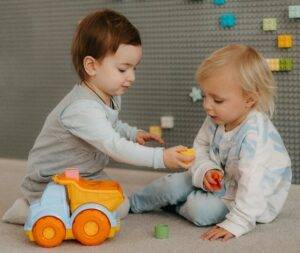
Once sitting, baby can:
- Use both hands to play with toys
- See their surroundings better
- Engage with you more easily
- Feed themselves finger foods
Sitting makes playing SO much more fun for baby!
Crawling (Usually Next)
Most babies start crawling 1 to 3 months after learning to sit.
Typical timeline:
- Sitting: 6 to 8 months
- Crawling: 7 to 10 months
But some babies skip crawling entirely and go straight to walking. That’s fine too!
Pulling Up (8 to 10 Months)
Baby uses furniture to pull themselves to standing.
Watch out! Once baby can pull up, they might not know how to get back down. They’ll cry for help!
Cruising (9 to 12 Months)
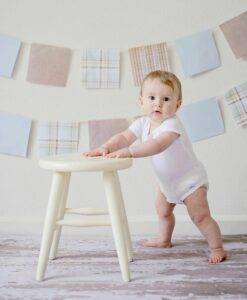 Cruising (9 to 12 Months)
Baby “cruises” along furniture, holding on while taking sideways steps.
Walking (10 to 15 Months): Independent walking usually comes 4 to 6 months after sitting.
Most babies walk between 12 to 15 months. But anywhere from 9 to 18 months is normal.
Sitting is the gateway skill that leads to all these other milestones!
Baby-Proofing Once Baby Sits Up
Once baby can sit, they can reach SO much more. Time to baby-proof!
Critical Safety Checklist:
Furniture:
- Anchor dressers, bookshelves, and TVs to walls (babies pull up and tip things over!)
- Move furniture away from windows
- Pad sharp corners on coffee tables
Floors:
- Keep floors clear of choking hazards
- Use baby gates at stairs
- Secure rugs so they don’t slip
Within Reach:
- Move plants out of reach (many are poisonous)
- Secure cords (blinds, lamps, chargers)
- Lock cabinets with cleaners or medicines
- Cover electrical outlets
 Safety Gear:
- Use a high chair once baby sits independently
- Always use straps in high chairs, shopping carts, etc.
- Never leave baby alone on elevated surfaces (changing tables, beds, couches)
Once baby sits, they’re WAY more mobile than you think!
Sitting Positions to Avoid
Some sitting positions can harm baby’s development.
W-Sitting (Sitting on Knees With Legs Out)
What it looks like: Baby sits on their bottom with knees bent and feet out to the sides (forms a “W” shape with legs)
Why it’s bad:
- Puts stress on the hips and knees
- Limits core strength development
- Can lead to tight hip muscles
- May cause toe-walking later
What to do: Gently move baby to cross-legged or side-sitting positions
Container Sitting for Long Periods

What it means: Leaving baby in swings, bouncers, car seats, or walkers for hours
Why it’s bad:
- Prevents muscle development
- Can cause flat head (plagiocephaly)
- Delays gross motor skills
What to do: Limit container time to 15 to 20 minutes at a time
Using Bumbo or Sit-Me-Up Seats Too Early
These seats prop baby upright before they’re ready.
Why it’s problematic:
- Doesn’t let baby develop core strength naturally
- Can delay independent sitting
- Puts pressure on the spine and hips
What to do: Wait until baby can almost sit independently before using these seats (and even then, limit time)
Let baby develop sitting naturally through floor play and practice.
Common Questions About Baby Sitting
Can sitting up too early hurt my baby?
No. If baby can sit up, their body is ready for it. You can’t force a baby to sit before they’re developmentally ready. Their muscles simply won’t support it.
Don’t worry about “early sitters.” If it happens, it’s because baby is ready.
My baby sits but always leans to one side. Is that normal?
Early on, yes. Babies often lean or favor one side when first learning. But if it continues, mention it to your pediatrician.
Most of the time, it’s just a phase as baby figures out balance.
Should I use a Bumbo or similar seat?
Use sparingly and only once baby is ALMOST sitting independently (around 5 to 6 months).
Never use Bumbo on elevated surfaces, for long periods (10 to 15 minutes max), and before baby shows sitting readiness
Floor time is better for development.
My baby skipped sitting and went straight to crawling. Is that okay?
Yes, totally fine! Some babies are more interested in mobility than sitting.
As long as baby eventually learns to sit (even if it’s after crawling starts), there’s no problem.
About 5 to 10% of babies skip traditional sitting milestones and develop differently. Usually not a concern.
Can I teach baby to sit up earlier?
You can help baby build sit up strength through tummy time and practice. But you can’t force developmental readiness.
Baby will sit when: muscles are strong enough, brain development allows it, and baby is motivated to sit up.
Pushing too hard doesn’t speed things up. Just provide opportunities and let baby develop naturally.
Your Baby Will Sit When They’re Ready

Watching other babies hit sit-up milestones before yours is hard. I get it. But here’s the truth: Your baby is developing on their own timeline.
When should babies sit up? Most babies sit up between 6 and 8 months. But anywhere from 4 to 9 months is a normal milestone.
What matters most in the sit-up milestone:
- Is baby making progress in sit-up (even if slow)?
- Can baby control their head?
- Is baby showing interest in sitting?
- Are other milestones developing?
If yes, baby is probably fine even if the sit-up is taking longer. Keep doing tummy time. Keep practicing. Keep encouraging.
And one day very soon, you’ll look over and baby sits there playing with toys like they’ve been doing it forever!
Need expert guidance on your baby’s development? Visit Omegapediatrics.com for trusted pediatric advice on milestones and more.
You’re doing great, mama. Your baby is right on track—their own track.