Your Friend’s Baby Is Crawling—And Yours Isn’t

Your neighbor’s 7-month-old is zooming across the floor. Your sister’s baby started crawling at 6 months. But YOUR baby? Still sitting in the same spot.
You’re starting to worry. Is my baby behind? Should they be crawling by now? Is something wrong?
Here’s what you need to hear right now: Every baby develops at their own pace. And crawling timelines vary WAY more than you think.
Some babies crawl at 6 months. Others don’t crawl until 10 months. And some babies skip crawling completely and go straight to walking.
In this guide, I’m answering exactly when babies start crawling, the signs your baby is almost ready, and how to help them learn (without pushing too hard).
Let’s figure out if your baby is on track.
When Do Babies Start Crawling? (The Real Answer)
Here’s the short answer: Most babies start crawling between 6 to 10 months old. But here’s what nobody tells you: There’s a HUGE range of normal.
All of these are NORMAL. The typical timeline could be:
- 6 to 7 months: Some early crawlers start
- 8 to 9 months: Most babies crawl around this time
- 10 months: Still totally normal to just be starting
- 11 to 12 months: Some babies skip crawling and go straight to walking
Why the Range is So Big
Your baby isn’t behind just because they’re not crawling yet. They’re on their own timeline. Babies develop at different speeds based on:
- Body type: Chunkier babies sometimes take longer (they have more weight to move!)
- Personality: Cautious babies wait until they’re SURE they can do it. Adventurous babies dive right in.
- Motivation: Does baby WANT to get somewhere? Or are they happy where they are?
- Floor time: Babies who get lots of tummy time usually crawl earlier
- Birth order: Second and third babies often crawl later (older siblings bring them toys!)
What Happens BEFORE Babies Start Crawling
Crawling doesn’t just happen overnight. Your baby has been building up to it for months. Here’s what leads up to crawling:
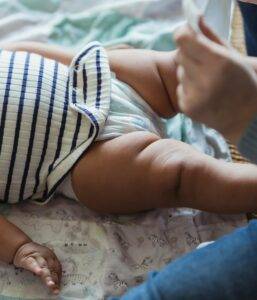
 Stage 1: Rolling Over (4 to 6 Months)
 Stage 1: Rolling Over (4 to 6 Months)
First, babies learn to roll from tummy to back, then back to tummy.
Why this matters: Rolling builds the core muscles needed for crawling.
Stage 2: Sitting Up (6 to 8 Months): Babies learn to sit without support.
Why this matters: Sitting strengthens back and neck muscles that crawling requires.
Stage 3: Pivoting and Scooting (6 to 8 Months): Baby sits and spins around in circles. Or they scoot on their bottom.
Why this matters: Baby is learning they can MOVE to get what they want.
Stage 4: Getting on Hands and Knees (7 to 9 Months)
Baby pushes up into crawling position but might just rock back and forth.
Why this matters: They’re building arm strength and learning balance.
Stage 5: Crawling! (6 to 10 Months)
Finally, all the pieces come together and baby moves forward!
Each baby moves through these stages at their own pace. Some skip stages completely.
7 Signs Your Baby is About to Start Crawling
Want to know if crawling is coming soon? Watch for these signs.
Sign 1: Baby Gets on Hands and Knees

Your baby pushes up into crawling position (on hands and knees). At first, they might just stay there. Or rock back and forth. That’s totally normal!
What this means: Baby is SO CLOSE. They’re building strength and learning balance. Crawling is probably just days or weeks away.
Sign 2: Baby Pivots in Circles: Baby sits and spins around to reach toys behind them. Or they scoot backward instead of forward (this is super common and hilarious!).
What this means: Your baby has figured out they can MOVE. Forward motion is next.
Sign 3: Baby Does “The Plank”
Baby pushes up on straight arms and straight legs, butt in the air. It looks like a yoga pose! Some people call it “the downward dog.”
What this means: Baby is building the arm and leg strength needed to hold themselves up while moving.
Sign 4: Baby Lunges Forward
When baby is sitting, they lunge forward to grab toys just out of reach.
They might fall on their face (gently catch them!). But they’re trying SO hard to get there.
What this means: Baby is MOTIVATED to move. That motivation drives them to figure out crawling.
Sign 5: Baby Does Tummy Push-Ups
 Sign 5: Baby Does Tummy Push-Ups
During tummy time, baby pushes their chest up off the ground using their arms.
What this means: They’re building the upper body strength needed to crawl.
Sign 6: Baby Scoots on Their Belly: Baby drags themselves forward on their belly, pulling with their arms. This is called “army crawling” or “commando crawling.”
What this means: This IS a form of crawling! Many babies do this for weeks before traditional hands-and-knees crawling.
Sign 7: Baby Gets Frustrated
Baby sees a toy across the room and gets MAD that they can’t reach it. They might cry, reach out, or flap their arms.
What this means: Frustration is actually GOOD. It motivates baby to figure out how to move.
If your baby shows 3 or more of these signs, crawling is probably coming VERY soon!
Different Types of Crawling (Yes, There’s More Than One Way!)
Not all babies crawl the same way. And ALL of these are normal.
- Classic Crawl (Hands and Knees): Baby moves on hands and knees, alternating opposite arm and leg. This is what most people picture when they think of “crawling.”
- Army Crawl (Belly Crawl): Baby drags themselves forward on their belly, pulling with arms and pushing with legs. This counts as crawling! Don’t worry that it’s not “proper” crawling.
- Bear Crawl: Baby crawls on hands and feet (not knees), with their bottom in the air. It looks funny, but it works great!
- Bottom Scoot: Baby sits and scoots forward on their bottom, pushing with their hands. Some babies get REALLY fast at this and never crawl traditionally.
- Crab Crawl: Baby moves sideways or backward instead of forward. Eventually, they figure out forward motion.
- Rolling Everywhere: Baby rolls to get where they want to go. If baby can roll in both directions, this is a totally valid way to move!
The method doesn’t matter. What matters is that baby CAN move independently.
When Should You Worry if Baby isn’t Crawling?
Most babies who aren’t crawling yet are totally fine. But here are times when you should call your pediatrician:
Call the Doctor if:

⚠️ By 9 months: Baby can’t sit up without support
⚠️ By 12 months: Baby shows no interest in moving at all (no rolling, scooting, or trying to crawl)
⚠️ By 12 months: Baby can’t support their weight on their legs when you hold them upright
⚠️ By 12 months: Baby consistently uses one side of their body more than the other (could indicate a problem)
⚠️ At any age: Baby loses skills they used to have (this is called regression and needs evaluation)
⚠️ At any age: Baby seems very stiff or very floppy
⚠️ At any age: You have a gut feeling that something is wrong
Most of the time, late crawling is just a normal variation. But it’s always better to check with your doctor if you’re worried.
What if Baby Skips Crawling Completely?
Some babies never crawl. They go straight from sitting to standing to walking. This is TOTALLY NORMAL.
About 10% of babies skip crawling. These babies aren’t “behind.” They just found a different way to get around.
What matters: Baby is learning to move independently somehow (rolling, scooting, bottom shuffling, or walking).
How to Help Your Baby Learn to Crawl (Without Pushing Too Hard)
Want to encourage crawling? Here are proven strategies.
1. Give LOTS of Tummy Time (This Is #1)
Tummy time builds ALL the muscles baby needs to crawl.
How much: Start with 3 to 5 minutes at a time, several times per day. Work up to 20+ minutes per day by 4 months.
Tips to make tummy time easier:
- Do it right after diaper changes (when baby is happy)
- Get down on the floor with baby (eye contact helps!)
- Put a mirror in front of baby (they love looking at themselves)
- Place toys just out of reach
- Put baby on your chest (this counts as tummy time!)
- Use a rolled towel under baby’s chest for support
If baby hates tummy time: Keep sessions short. Do it several times a day. It gets easier!
2. Create a Safe Crawling Space
 2. Create a Safe Crawling Space
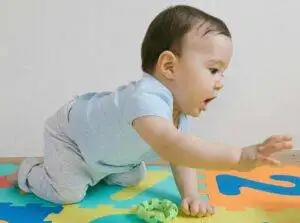
Baby needs room to practice. The more space baby has, the more motivated they’ll be to explore.
Create a baby-safe zone:
Same-day and next-day appointments available.
- Clear a large floor space
- Remove hazards (cords, small objects, sharp corners)
- Use a play mat or blanket
- Make sure the floor is clean (baby will put hands in mouth!)
3. Use Toys as Motivation
Place baby’s favorite toy just out of reach.
Not SO far, they get frustrated and give up. Just far enough that they have to TRY to get it. When baby reaches it, celebrate! Then move it slightly farther.
Best motivating toys:
- Toys that light up or make sounds
- Balls that roll (baby wants to chase them!)
- Crinkly toys
- Toys with faces (babies love faces)
4. Get Down on the Floor With Baby
Babies want to be where YOU are. Get on the floor. Crawl around. Show baby how fun it is to move! Call baby to come to you. Pat the floor. Make it exciting!
Babies learn by watching. Seeing YOU crawl might inspire them to try.
5. Let Baby Play in Just a Diaper
Clothes and footed pajamas can make it harder to get traction. Let baby practice crawling in just a diaper (if your house is warm enough).
Their bare knees grip the floor better. And they can feel the floor with their hands and feet, which helps with balance.
6. Don’t Use Walkers or ExerSaucers Too Much
Walkers, jumpers, and ExerSaucers keep baby upright. But they DON’T build the muscles needed for crawling.
Limit these to 15 to 20 minutes per day. Baby needs floor time to learn to crawl.
Never use baby walkers. They’re actually dangerous and can delay walking.
7. Celebrate Every Attempt
Baby scoots backward? Cheer! Baby rocks on hands and knees? Get excited! Every attempt builds confidence. Your encouragement motivates baby to keep trying.
8. Don’t Push Too Hard
If baby isn’t interested in crawling yet, that’s okay. Don’t force tummy time if baby is screaming. Don’t push baby into the crawling position.
Follow baby’s lead. Encourage, but don’t pressure. They WILL crawl (or walk) when they’re ready.
Baby-Proofing Before Baby Starts Crawling (Do This NOW)
Once baby starts crawling, they’re INTO EVERYTHING. Baby-proof BEFORE they’re mobile. Seriously.
Critical Safety Checklist:

✅ Cover outlets with childproof covers
✅ Secure furniture to walls (dressers, bookshelves, TVs can tip over)
✅ Install baby gates at the stairs (top and bottom)
✅ Lock cabinets with cleaning supplies, medicines, or chemicals
✅ Remove choking hazards from the floor (coins, small toys, pet food)
✅ Pad sharp corners on coffee tables and furniture
✅ Move cords out of reach (window blind cords, electrical cords)
✅ Lock toilet lids (babies can drown in toilets)
✅ Remove plants (many houseplants are poisonous)
✅ Secure rugs so they don’t slip
✅ Block off dangerous areas (fireplaces, dog bowls, litter boxes)
Get down on your hands and knees and look at your house from baby’s level. You’ll spot hazards you never noticed!
Room-by-Room Baby-Proofing
Living Room:
- Secure TV and furniture
- Cover outlets
- Remove small objects from low shelves
- Pad coffee table corners
Kitchen:
- Lock cabinets with cleaners
- Use the back burners when cooking
- Keep knives and sharp objects up high
- Lock the oven when not in use
- Watch for a hot dishwasher door
Bathroom:
- Lock the toilet lid
- Store medicines up high and locked
- Keep hair tools unplugged and away
- Use a non-slip bath mat
- Lock cabinets with products
Bedroom:
- Secure the dresser to the wall
- Keep small objects off the floor
- Use cordless blinds or secure cords
- Check for gaps, baby could get stuck in
Stairs:
- Gates at top AND bottom
- Make sure railings don’t have wide gaps
Once baby is mobile, they move FAST. Be ready!
What Comes After Crawling?
Crawling is just the beginning! Here’s what usually happens next:
👣 Pulling Up (8 to 10 Months): Baby uses furniture to pull themselves up to standing.
Watch out: Baby might not know how to get back DOWN. They’ll cry for help. Teach them how to bend their knees and sit back down.
👣 Cruising (9 to 12 Months): Baby “cruises” along furniture, holding on while taking sideways steps.
Baby-proof NOW: Make sure furniture won’t tip. Remove anything baby could pull down on themselves.
👣 Standing Alone (10 to 14 Months): Baby lets go of the furniture and stands without holding on. At first, just for a few seconds. Then longer and longer.
👣 First Steps (10 to 15 Months): Baby takes their first independent steps! Most babies walk between 12 to 15 months. But anywhere from 9 to 18 months is normal.
Some babies skip crawling and go straight to walking around 12 to 14 months. This is fine!
For further insights, check out this article: What is the Average Age for Kids to Start Walking. and Major Milestones of Physical Development? and Comprehensive Guide to Baby-Proofing Your Home: 41 Essential Tips for New Parents
Your Baby Will Crawl When They’re Ready

I know comparing your baby to other babies is hard. Your friend’s baby is crawling. The baby at daycare is crawling. But yours is still sitting there.
It’s hard not to worry. But here’s the truth: Your baby is exactly where they need to be.
When do babies start crawling? Between 6 to 10 months for most babies. But some crawl as early as 5 months or as late as 12 months.
What if my baby doesn’t crawl? About 10% of babies skip crawling completely. They’re not behind.
Should I be worried? Only if baby isn’t moving AT ALL by 12 months, or if you see the red flags I listed earlier.
What matters most:
- Is baby showing interest in moving?
- Is baby getting stronger (doing tummy time, sitting up)?
- Is baby meeting other milestones?
If yes, crawling will come. In baby’s own time. Keep doing tummy time. Keep encouraging. Keep celebrating every small step.
And one day very soon, you’ll be chasing a speedy crawler around the house, wishing for the days when they stayed in one spot! 😊
Want expert guidance on all your baby’s milestones? Visit Omegapediatrics.com for trusted pediatric advice and developmental support.
You’re doing an amazing job, mama. Your baby is right on track—their own track.
Quick Answer
Most babies start crawling somewhere between 6 and 10 months, but there is a wide range of normal. What matters more than one exact month is whether your baby is building strength, coordination, and steady developmental progress over time.
When to call
- Your baby seems stiff, floppy, very one-sided, or is losing skills.
- You are not seeing steady progress toward sitting, moving, or bearing weight over time.
- You want a milestone check at a wellness visit because something feels off.
Quick FAQs
What age do most babies crawl?
Many babies crawl somewhere between 6 and 10 months, but some start earlier and some skip crawling altogether.
Is it bad if my baby skips crawling?
Not always. Some babies go straight to pulling up and walking, but overall development still needs to make sense as a whole.