When it comes to immunizing children—our most precious and beloved ones—vaccine safety is the number-one concern. As a pediatrician writer sharing insights the way you’d find on Omega Pediatrics (think friendly, clear, and evidence-based), I want to walk you through exactly how vaccine safety trials work.
I’ll explain each step in plain language (5th-grade reading level) so you feel confident and informed. I’ll cover:
- What vaccine trials are and why they matter
- The phases of testing from the lab to real children
- How safety is checked both before and after approval
- How decisions are made about dosage, risk, and benefits
- What parents can ask and expect
Let’s dive in.
Why Vaccine Safety Trials Matter
When a vaccine is developed, it isn’t simply given to the public right away. Because the vaccine will be used in healthy children and adults, it must meet very high safety standards.
The body of research from authorities, like the World Health Organization (WHO) and the Centers for Disease Control and Prevention (CDC), shows that every approved vaccine has undergone multiple layers of testing. Here’s why this matters:
- Vaccines are given to healthy people; you want to be sure the vaccine doesn’t create more harm than the disease it protects against.
- Because the disease may be rare in some settings, you need large numbers and long follow-up to see uncommon side effects.
- Once many people get the vaccine, real-world effects (outside of the trial setting) may differ slightly—so continuous monitoring is essential.
In the next sections, we’ll look closely at how that thorough “trial plus monitoring” process is structured.
Stages Before Any Child Receives the Vaccine
1. Research and Discovery
Every vaccine starts with an idea—a germ (virus or bacteria) that causes illness, or a piece of that germ that can be used safely. Researchers look for a part of the germ (called an antigen) that the immune system can recognize.
2. Pre-clinical (Lab and Animal) Testing
Before any human volunteer, the vaccine candidate is tested in non-human systems: lab-grown cells (in vitro) and animals like mice or sometimes primates (in vivo). This helps determine:
- Does the vaccine provoke an immune response (does it “work” in principle)?
- Is it safe at basic levels (does it cause obvious harm in animals)?
- What dose might make sense for human testing?
If results are promising, the manufacturer begins trials in humans (for example, in the US, the company files an “Investigational New Drug” (IND) application).
 The Human Trials—Phases I, II, III (and Beyond)
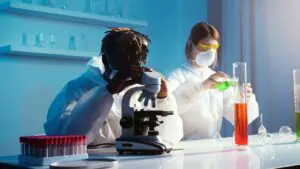 The Human Trials—Phases I, II, III (and Beyond)
Once a vaccine passes preclinical testing, the human trial phases begin in sequence (though sometimes they overlap). These phases focus increasingly on safety, dosage, immune response, and finally, real protection.
Phase I – Small Group, Basic Safety and Dose
In Phase I trials:
- A small number (often 20-100 healthy adult volunteers) receive the vaccine.
- Goals: Is the vaccine safe at this dose? Are there any major side effects? Does the immune system respond?
- It is not yet tested for “Does it prevent the disease? ” in large numbers—that comes later.
- Researchers also try to find the best dose (amount) and how many shots (one or more) might be optimal.
Phase II – Expanded Group, Age and Dose Refinement
If Phase I looks good, Phase II begins:
- Hundreds of participants, including people similar to those who will eventually get the vaccine (children and older adults), may be involved.
- Detailed safety data is collected. Immune responses are studied in depth (for example, how many antibodies are made and how the T‐cell system responds).
- Different formulations (for different age groups, for instance) may be compared.
- Researchers begin to look for side effects that may be less common or may show up only when more people get the vaccine.
Phase III—Large-Scale Study for Safety, Efficacy, and Rare Side Effects
Phase III is the big test. Here’s how it works:
- Thousands (sometimes tens of thousands) of participants. Trials may include many sites across different countries to ensure diverse populations.
- Participants are randomly assigned to receive either the vaccine or a placebo (or another comparator). This type of trial is often randomized, double-blind, and placebo-controlled (neither the participant nor the person giving the vaccine knows who got the real vaccine vs. placebo) to reduce bias.
- The trial measures two key things:
- Efficacy (does the vaccine prevent the disease it’s targeting?)
- Safety (what side effects occur, how often, and in whom?) The large number helps detect rare but important side effects that smaller trials might miss.
- Follow-up may last months to years to catch longer-term outcomes.
Phase IV (Post-Licensing Surveillance)
Even after the vaccine is approved for use by regulatory authorities (like the US Food & Drug Administration (FDA)), monitoring continues:
- Researchers and public health agencies track how the vaccine performs in the real world (effectiveness) and in larger, more varied populations.
- Systems exist to detect rare adverse events (side effects) that may not have been visible in the trial.
- Vaccine lots (batches) are tested for quality, potency, purity, and sterility.
How Safety is Assessed at Each Stage
What Does “Safety” Mean in Vaccine Trials?
When we talk about vaccine safety, we mean several things:
- Immediate reactions (soreness, fever, redness at the injection site)
- Short-term side-effects (days to weeks)
- Medium- to long-term side-effects (months or years)—these are rare but important
- Manufacturing consistency and quality (each dose meets high standards)
Trial Design to Maximise Safety Monitoring
Trial protocols are carefully written plans describing exactly how the vaccine will be given, monitored, and measured. Key design features include:
- Eligibility criteria (who can join—generally healthy adults first, then children, then special populations)
- Randomization and blinding: as mentioned, these reduce bias (so results aren’t affected by people knowing who got the vaccine).
- Comparator or placebo groups: To know if side effects are really from the vaccine, you compare with people who did not get it or got something inert.
- Dose escalation: In early phases, different doses might be tested to find the most effective dose that still remains safe.
- Follow-up period: Participants are monitored for a set time, sometimes with visits, blood tests, and questionnaires, to capture side effects.
- Data safety monitoring boards (DSMBs): Independent experts review the safety data and can stop a trial if serious problems appear.
Identifying Rare Adverse Events
Because some side effects happen very rarely (for example, 1 in 100,000), detecting them requires large numbers and long follow-up. Trials may not pick up extremely rare events. That’s why post-licensing monitoring is so important.
Benefit-Risk Analysis
Regulatory authorities review all the data to ask: Do the benefits of the vaccine (disease prevention, lives saved, reduced hospitalizations) outweigh any risks (side effects) in the target population? If yes, the vaccine is approved.
Same-day and next-day appointments available.
What Happens in Regulatory Review and Approval
Once a vaccine passes trials with strong data for safety and efficacy, the manufacturer applies to the regulatory body (FDA in the US, national regulators in other countries). The vaccine may then be licensed or authorized (sometimes emergency authorization in special situations). The process includes:
- Reviewing pre-clinical and clinical trial data (all phases)
- Manufacturing review (how the vaccine is made, quality controls, batch testing)
- Labeling, instructions, proposed usage (age groups, dosage schedule)
- Risk-management plans (how side-effects will be monitored)
After approval, public health agencies set recommendations and monitor implementation.
Post-Approval Monitoring – Safety Never Stops
Even after a vaccine is in use, the work isn’t over. Continuous monitoring is central to long-term safety.
🤲 Real-World Effectiveness vs Trial Efficacy
In trials, conditions are tightly controlled; in the real world, populations are much larger and more varied (different ages, underlying conditions, and varied health systems). The real-world “effectiveness” may differ from the “efficacy” measured in trials.
🤲 Systems That Monitor Safety After Use
Governments and health agencies use several systems. These allow health agencies to spot unusual patterns, investigate whether they’re linked to the vaccine, and take action if needed (change recommendations, monitor a batch, and ask for further research).
- Early-warning reporting systems in which providers/individuals can report any health event after vaccination.
- Large healthcare databases tracking health outcomes in vaccinated vs. unvaccinated groups.
- Long-term studies on special populations (pregnant women, older adults, and children) to detect events that might only appear under certain conditions.
🤲 Manufacturing Quality and Batch-Testing
Every batch of vaccine is tested for potency (does it work), purity (no unwanted contaminants), and sterility (no unwanted germs). Regulatory agencies inspect manufacturing facilities regularly. This ensures that each dose going into a child is reliably safe.
What Parents Should Know and Ask
As a parent, you want to feel secure that your child’s vaccine—and every vaccine—has been meticulously tested. Here are key points and questions you can ask your healthcare provider or look up yourself.
🤲 What to Understand
- Every licensed vaccine went through multiple phases of testing involving thousands of people (adults and children), followed by ongoing monitoring.
- Smaller trials cannot detect extremely rare side effects; hence, the need for large trials and post-licensing surveillance.
- The safety of vaccines is continuously monitored—the job is never complete once the vaccine is approved.
- The decision to approve a vaccine relies on a benefit vs. risk calculation—for healthy children, the bar is very high.
🤲 Questions to Ask Your Provider

- Has this vaccine gone through robust clinical trials with children in the age group of my child?
- What side effects were seen in the trials? What rare events were monitored?
- How long have participants been followed after vaccination (months or years)?
- What is the real-world experience (how many doses given worldwide, and what side-effect reporting systems show)?
- What batch/lot testing and manufacturing quality controls are used?
- After approval, how is the vaccine’s safety monitored in practice?
🤲 How to Interpret Side-Effect Reporting
- If you hear about a possible side effect, check whether it is based on rigorous evidence (large trial or post-licensing data) or just anecdotal.
- A report of an event after vaccination does not mean the vaccine caused the event. Investigations often find the rate of the event is the same or lower than the background rate (what would happen anyway without vaccination).
- Be aware that health systems use large-scale data to check whether an event is occurring more often in vaccinated people than would be expected by chance.
Why the Process is Robust—and Continuous
When you reflect on the process, you’ll see multiple layers of protection built into vaccine safety:
- Multiple phases (lab → animal → human small → human medium → human large) with safety at every step.
- Randomization and blinding to reduce bias and help reveal true effects.
- Large number of people in Phase III to uncover both common and less common side effects.
- Manufacturing quality checks to ensure every dose meets standards.
- Post-licensing monitoring to catch rare or late-appearing effects and to monitor real-world performance.
- Transparent regulatory review and benefit-risk analysis to protect the public.
Because of this, the vaccine supply in countries like the US is described by the CDC as “the safest in history.”
A Real-World Example to Illustrate (Simple)
Imagine a new vaccine against a virus called “X-virus” is being developed for children. Here’s how the safety trial path might look:
- Scientists identify the part of the X-virus that can safely trigger immunity. They test it in mice and find no safety concerns.
- Phase I: 50 healthy adult volunteers get dose A and dose B. Monitor for 1 month: local soreness, fever, blood work. Both doses are fine.
- Phase II: 300 children aged 5-11 receive the vaccine (dose B) or placebo. Follow-up at 6 months, check immune responses, and safety side effects. All looks good.
- Phase III: 10,000 children aged 5-11 were randomized to vaccine vs. placebo across many sites. They are followed for 1–2 years to see how many get X-virus illness and how many have side effects.
- Outcome: The vaccine reduces X-virus illness by 80%. Side-effect rates are low and similar to placebo for common ones; rare side effects are monitored.
- Regulatory review: Data submitted, manufacturing methods reviewed, the vaccine is approved for ages 5-11.
- Post-approval: The vaccine is given to millions of children. Systems monitor for any unusual rates of side effects. Lots are tested, and the manufacturing facility is inspected. If something unusual shows, an investigation begins.
Through this example, you can see the “many steps, many safeguards, many people monitored over time” structure.
Addressing Common Concerns
Were the trials too short to catch long-term side effects?

It’s a valid question. Trials do last months to years, but some rare side effects might only appear later. That’s why the long-term monitoring system exists. Because of the initial large-scale trials plus real-world surveillance, we have strong confidence in vaccine safety.
Can we trust the data?
Yes—trials are designed to minimize bias. Independent boards monitor safety. Regulatory agencies review data. Research has found very little new evidence of increased risk for key adverse events with many routine vaccines.
What if my child has an underlying health condition?
Many vaccine trials include or follow up later on children with underlying conditions (after initial safety is confirmed in “healthy” children). Your doctor can advise if there are special considerations for your child.
Why do we still monitor after approval—doesn’t that show they weren’t sure?
Not at all. Monitoring after approval is part of the plan, because once millions of doses are given, rare events (which might happen 1 in 100,000 or even 1 in a million) can be detected. It’s an extra layer of safety.
Key Takeaways
- Vaccine safety trials are rigorous, multi-phase, and built to protect children and adults alike.
- From lab studies to large human trials to ongoing real-world monitoring, safety is tracked at every step.
- Randomized, blinded, controlled trials reduce bias and enhance the reliability of results.
- Even after approval, monitoring continues—safety is not “finished” when a vaccine hits the market.
- As a parent, you can ask informed questions and feel confident that vaccines approved for your child have passed through a strong safety net.
Vaccine Safety Trials for Your Peace of Mind

When you bring your child in for a vaccine, it’s normal to have questions. The fact that you feel those questions shows you care deeply about your child’s health. The trial process, regulatory review, and monitoring systems are designed for that very reason—to give you peace of mind.
If you want to look up which trial your child’s vaccine went through or ask about how many children in the trial, ask your provider—many will be happy to explain.
Thank you for reading—I hope this guide empowered you. Keeping our children safe is a shared mission, and understanding how vaccine safety trials work is a strong step in that direction.