When you’re nursing a sick child, you may be filled with worry. Your heart tugs, your mind races, and you wonder—are you doing enough? The good news is, most of the time, if the illness is mild or moderate, you can help them recover at home.
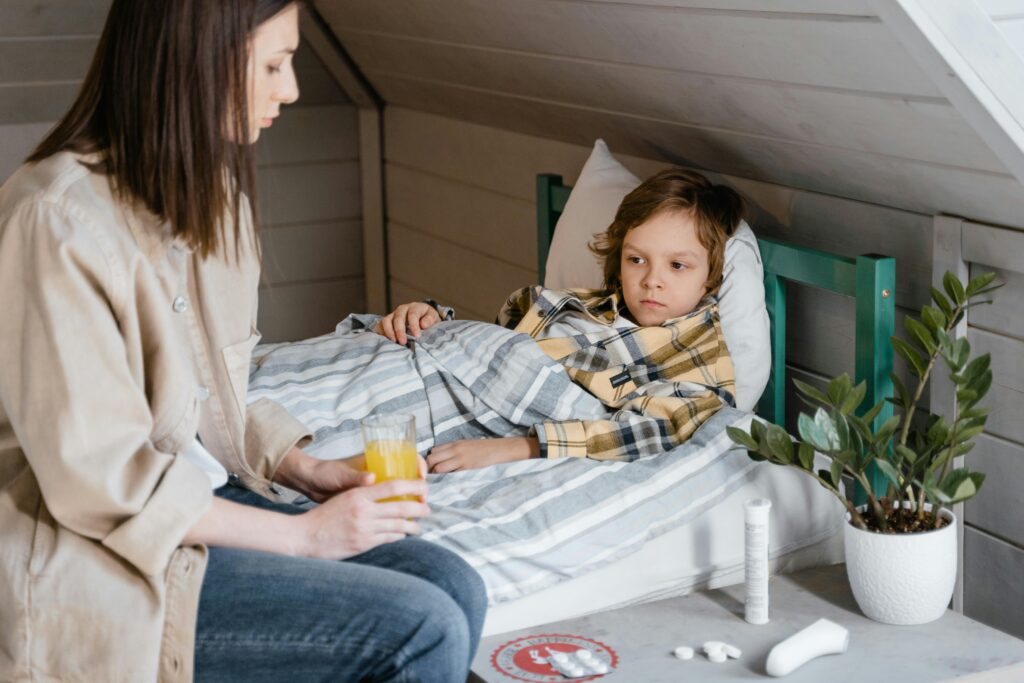
With patience, care, and a little know-how, your home becomes the safest, coziest place for your child to rest, heal, and recover. This post will walk you through everything you need to know—from comforting basic fevers and colds, to when to call a doctor, and how to keep your child comfortable, hydrated, and calm.
💗 Why Home Care Matters—The Power of Love, Rest, and Comfort
When a child falls sick, what they often need most isn’t fancy medicine—it’s a calm home, good rest, plenty of fluids, and a parent’s loving care.
- Your home offers familiar surroundings. Kids feel safer there.
- Rest helps the body fight infection. Sleep and quiet moments give your child’s immune system time to work.
- Drinking enough fluids helps keep the body strong, helps clear out germs, and prevents dehydration.
- Emotional support, cuddles, comforting words, and a calm presence help them relax. A relaxed child recovers faster.
Even experts agree: for most common illnesses, rest + hydration + comfort are the best first steps. And if you use this time wisely, you’ll help your child bounce back safely—while guarding against complications like dehydration or worsening symptoms.
🏡 Step-by-Step: How to Care for a Sick Child at Home
Here’s a simple, step-by-step home care plan you can follow when your child gets sick:
1. Set Up a Healing Space
- Pick a quiet, comfortable room where your child can rest. Use soft pillows and light bedding.
- Keep the room temperature cozy, neither too hot nor too cold.
- Dim the lights—a calm, restful environment helps them sleep and heal.
- Have a “comfort kit” ready nearby: soft blankets, a favorite stuffed toy or pillow, a sippy cup or water bottle, tissues, and maybe a humidifier.
A humidifier or a steamy bathroom (for older kids) can ease coughs or stuffy noses.
2. Prioritize Hydration: The Healing Power of Fluids

When kids are sick, they lose more fluids (due to fever, sweating, runny nose, vomiting, or diarrhea)—so keeping them hydrated is essential. If hydration is maintained and your child shows signs of improvement (a better mood, more energy, regular urination), that’s a great sign. 💧
- Offer small, frequent sips rather than big gulps. Use water, diluted juice, or an oral rehydration solution (ORS) if vomiting or diarrhea is present.
- For babies: continue breastfeeding or formula feeding as usual if they can tolerate it.
- For older kids: popsicles, warm broth, or lightly flavored water (with a splash of fruit) can encourage drinking.
- Watch for signs of dehydration, including dry mouth, few wet diapers or little urine, sunken eyes, lethargy, or decreased tears when crying.
3. Give Plenty of Rest—Let the Body Heal
- Rest helps the body fight infections, rebuild strength, and recover faster.
- Avoid vigorous play or physical activity until they have fully recovered.
- Keep naps and bedtime simple and calm. A familiar bedtime routine (books, soft music, dim lights) can help even when kids are under the weather.
- Reduce screen time. Excessive screen light or noise may interrupt rest. Quiet activities, such as reading, puzzles, or quiet drawing, are better.
4. Manage Fever, Cough, or Discomfort (if needed)
Sometimes, you might need to ease symptoms so your child feels better while recovering. Here’s how:
- For fever or pain: use age-appropriate fever reducers (like acetaminophen or ibuprofen) —but only as directed, and never give aspirin to children.
- Offer warm fluids (like broth or warm water) or honey (for children over 1 year) to soothe a sore throat or cough—but avoid honey for babies under 1.
- Use a humidifier or do a steamy bath (for older children) to help with congestion and ease breathing.
- Keep the child’s head slightly elevated when lying down (with one extra pillow) to help with breathing and nasal drainage—especially helpful for colds and coughs.
5. Comfort, Reassure—Emotional Care Matters

Being sick can be scary for a kid. They may be tired, cranky, or confused. Emotional comfort from you does wonders:
- Give gentle hugs, soothing words, and gentle reassurance.
- Offer their favorite toys, soft blankets, or quiet storytelling.
- Stay calm — children often mirror their parents’ emotions. A calm, soothing parent helps them feel safe.
- Maintain a consistent routine: regular hydration, rest, and comfort help them feel secure even if sickness disrupts normal life.
✅ When to Keep Your Child Home—and When to Let Them Return
It’s often best to let children rest at home when they’re sick. But how do you know when to keep them home—or when to send them back to school, daycare, or play? According to child care guidance and expert recommendations:
- Stay home if your child has a fever, vomiting, diarrhea, persistent cough or breathing difficulty, or is too tired or weak to play.
- Once the fever has been gone for at least 24 hours without the need for fever-reducers (and symptoms are improving), and your child feels well enough—usually it’s fine to return.
When in doubt, trust your instincts. If something feels “off,” it’s better to rest at home—or get medical advice.
⚠️ When You Should See a Doctor or Get Medical Help
Most mild to moderate illnesses can be managed at home. But some signs must never be ignored. Your child’s health—and your peace of mind is worth being extra cautious. Call a doctor (or go to a clinic) if your child:
- Has very high fever (e.g., 38°C+ in a baby, or 40°C/104°F in older children) that lasts more than 24–48 hours without improvement.
- Cannot keep fluids down (vomits repeatedly or refuses to drink)
- Shows signs of dehydration—dry mouth, few wet diapers or little urine, sunken eyes, lethargy, unusual sleepiness.
- Has difficulty breathing, rapid breathing, wheezing, or a persistent cough.
- Is unusually drowsy, unresponsive, or confused
- Has severe pain (ear pain, stomach pain), rash, or other concerning symptoms lasting more than a few days.
💡 Bonus Tips: Make Home Care Easier, Cozier, and More Effective
- Create a “sick-day box” in advance. Keep spare pillows, soft blankets, a cool-mist humidifier, tissues, oral rehydration salts (ORS), gentle fever remedies (as advised by your doctor), and favorite toys or books. When sickness strikes, you’ll be ready.
- Plan quiet, low-energy activities: Soft reading, calm music, drawing, puzzles—avoid loud or stimulating games.
- Use gentle distractions: Your child might feel bored or scared. Gentle toys, storybooks, or soft music help them relax and forget discomfort.
- Lean on community and family support: If possible, have someone help with meals, hydration, or comforting hugs while you rest, too. Caring for a sick child is draining—and that’s okay. Ask for help when needed.
- Maintain good hygiene in the household: Wash hands regularly, disinfect toys and surfaces, keep tissues and trash bins readily available. This helps prevent germs from spreading to you or siblings.
 (as advised by your doctor), and favorite toys or books. When sickness strikes, you’ll be ready.
🔁 After Recovery: How to Bounce Back and Stay Strong
Once your child begins to feel better, guide them gently through the final steps of recovery. Even when the fever is gone, and the smiles are back, their body are still working hard to rebuild strength. A little extra attention during this time helps them return to normal safely—and lowers the chance of getting sick again soon.
🌟 Ease Back Into Routine
Children often want to jump right back into full activity the moment they start to feel better. But their bodies may still be tired inside, even if their energy seems to return quickly. Think of this phase as “gentle re-entry.” Slow and steady helps your child bounce back stronger.
- Let them resume regular meals, simple play, and nap times at a steady pace.
- Avoid rushing them back into school, daycare, or sports until they have at least 24 hours with no fever and overall improvement.
- Watch for signs of fatigue: if they get tired faster than usual, a bit more rest will help their body finish the healing process.
🍎 Reinforce Healthy Daily Habits

Strong daily habits are like giving your child’s immune system a boost of armor. After being sick, these habits matter even more. These habits don’t just aid recovery—they help prevent future sickness.
- Good sleep: Their body repairs itself while they sleep. Earlier bedtimes help speed up the full recovery process.
- Balanced nutrition: Simple meals featuring fruits, vegetables, whole grains, and lean protein replenish energy and support a healthy immune system.
- Hydration: Drinking water throughout the day keeps their system working smoothly.
- Clean environment: Wiping down surfaces, washing bedding, and cleaning toys help remove leftover germs and reduce the chance of another illness.
🩺 Consider a Quick Follow-Up
If your child had a longer or more severe illness, a follow-up visit with your pediatrician can give you peace of mind. Omega Pediatrics encourages parents to follow up whenever they feel unsure—because reassurance and expert guidance help you and your child. A quick check helps make sure:
- Lungs and breathing are clear
- Hydration is back to normal
- Energy and appetite are improving
- No hidden issues that need attention
🧼 Teach Gentle Preventive Hygiene
Once children recover, it’s the perfect time to reinforce good hygiene habits in a positive, kid-friendly way. These small behaviors work wonders in preventing future germs from spreading:
- Hand washing before eating, after using the bathroom, and after playing
- Covering their mouth or nose when coughing or sneezing (using the elbow technique)
- Not sharing cups, utensils, water bottles, or straws
- Understanding personal space when someone is around who is sick
You don’t have to lecture—gentle reminders and simple explanations help even young children understand that these habits are essential for everyone’s health.
Why This Kind of Caring Aligns with Trusted Pediatric Values
 Why This Kind of Caring Aligns with Trusted Pediatric Values
At Omega Pediatrics, we believe that caring for a child goes far beyond treating symptoms. It’s about supporting the whole family and helping parents feel confident, calm, and informed.
When you care for your sick child at home with patience, love, and steady attention, you’re practicing the same core values we use every day in the clinic.
Same-day and next-day appointments available.
❤️ 1. Health Is More Than Medicine
Medicine is important, but it’s only one part of a child’s healing. Children recover best when they feel safe, rested, and cared for. Home care gives them comfort that no medication can replace. When you offer cuddles, soothing words, warm soup, or a quiet place to rest, you are helping their body fight illness naturally.
This kind of gentle care aligns with Omega Pediatrics’ approach—treating children as whole people, not just symptoms.
🌱 2. Routine and Stability Build Stronger Kids
When a child is sick, routines are disrupted. Helping them maintain simple, familiar patterns— like bedtime routines, small meals, and regular hydration—supports their emotional and physical recovery. Omega Pediatrics encourages families to build healthy routines because they make children feel secure.
That sense of stability helps the immune system, reduces stress, and strengthens long-term health.
🤝 3. Parenting With Understanding
Gentle parenting plays a huge role when kids are sick. Children often struggle to express discomfort or fear. Sometimes they become clingy, fussy, or tired. Responding with patience instead of frustration helps them feel safe and understood.
This aligns with Omega Pediatrics’ belief that emotional care is just as important as physical care. A child who feels emotionally supported heals better.
🧠 4. Empowering Parents With Knowledge
We want families to feel confident, not confused, when caring for a sick child. That’s why Omega Pediatrics shares simple, clear guidance on what symptoms to watch for, how to give comfort, and when to get medical help.
When you take an active role in your child’s care at home, you’re putting this knowledge into action—and becoming your child’s strongest protector.
🏡 5. Strong Families Build Healthy Kids
Every small act of care strengthens your connection with your child. Whether it’s sitting beside them while they rest, keeping them hydrated, or reading a calm story, you’re building a foundation of trust. Omega Pediatrics believes that strong families lead to strong, resilient children.
Home care during sickness gives families time to bond and grow together.
😀☺️ Caring for your sick child at home isn’t just about helping them get better today. It connects directly to the bigger picture—raising confident, healthy, emotionally supported children. This is the heart of Omega Pediatrics: blending medical guidance with love, connection, and everyday support for parents.
Just as their post, Keep Healthy Skin Every Season: 7 Smart Ways to Protect Your Child Year-Round, helps families build daily routines for long-term health, your home care during sickness becomes part of a larger rhythm of care and resilience.
💬 Help Your Little One Feel Better at Home

Caring for a sick child can feel overwhelming, but remember: love, comfort, rest, and fluids remain your greatest tools. With patience, calm, and attention, you can gently guide your child toward recovery—all within the warmth and safety of your home. When in doubt, trust your instincts.
If something doesn’t feel right—or if symptoms worsen—seek professional care. However, for many common illnesses such as mild fevers, colds, or stomach bugs, your home care can make all the difference.
You—the parent, guardian, or caregiver—are your child’s greatest healer, especially when armed with knowledge, compassion, and calm. Here’s to brighter, healthier days ahead for your little one.
Helpful Reads from Omega Pediatrics
- 7 Safe Best Practices for Managing Fever After Vaccination (A Comfort-Focused Guide for Parents)
- Toddler Waking and Crying at Night: 7 Surprising Reasons (And How to Gently Help Them Sleep Better)
Quick Answer
Home care works best when parents focus on hydration, rest, fever comfort, and watching for the signs that mean it is time to come in. Age matters a lot, especially in babies under 3 months.
When to call
- A baby under 3 months has a fever of 100.4°F or higher.
- There is trouble breathing, dehydration, worsening lethargy, or repeated vomiting.
- Your child looks worse instead of better or you are not sure the illness is staying mild.
Quick FAQs
What matters most when a child is sick at home?
Hydration, breathing, comfort, and watching for red flags matter most.
When should I stop home care and come in?
Come in sooner when there is breathing trouble, dehydration, age-based fever risk, or a child who is clearly worsening.